


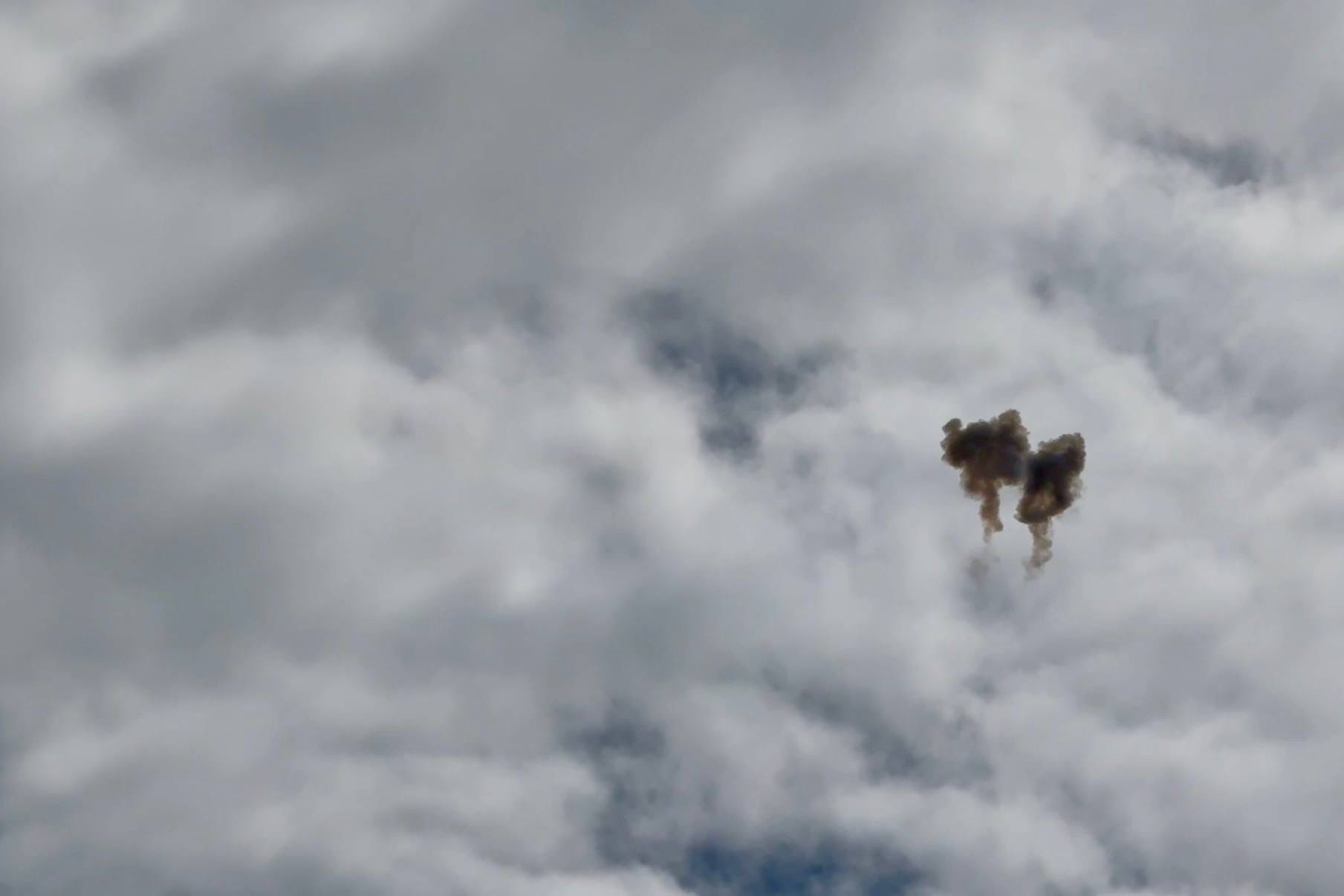
President Donald Trump and top surrogates of his 2024 campaign — people like JD Vance and Tulsi Gabbard — said “America First” means sidestepping the quicksand of foreign intervention and stanching the flow of Americans’ blood and money to faraway conflicts in which they have no obvious stake. Or did it actually signify a Great Power willing to exert influence for itself and its ally Israel by dispensing with all-but-imaginary international law and the pearl clutching of academics and middle powers about a rules-based international order?
Prescribing what to think about the U.S.-Israel mission would violate our own. But you should have all the facts.
Some may dispute the choice to begin this timeline in February 2025, rather than in 2024 when the Department of Justice revealed a plot by the Islamic Revolutionary Guard Corps to assassinate Trump; or in 2018, when the first Trump administration ripped up the 2015 Joint Comprehensive Plan of Action (JCPOA); or in 490 BC, when the Persians battled the Athenians. But every timeline must have some discrete start date, and ours was chosen for simple practicality. Trump’s announcement of the death of Supreme Leader Ali Khamenei provides the other bookend. - Emily Kopp, Editor-In-Chief
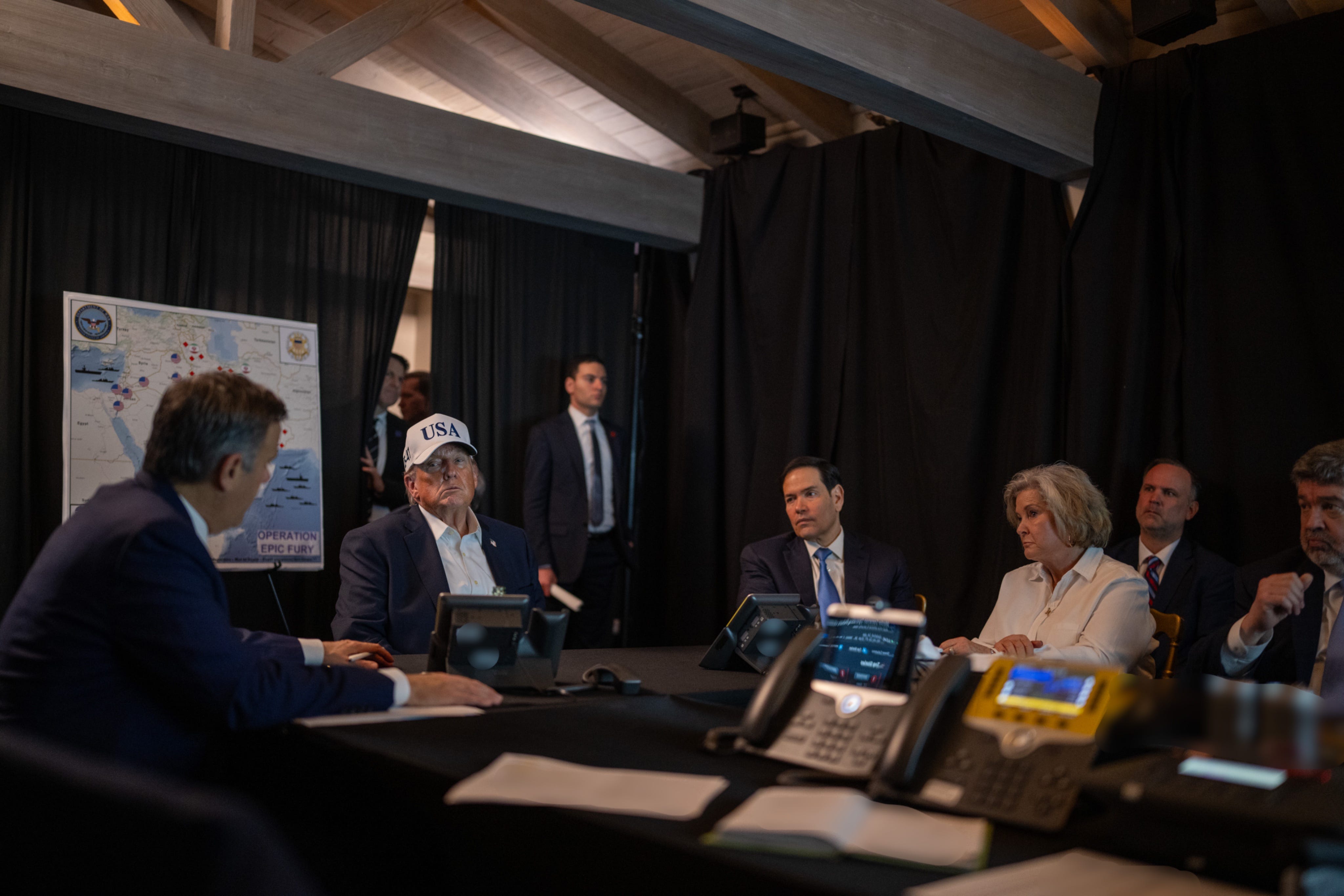
MAXIMUM PRESSURE: February 5, 2025 - June 12, 2025
February 5, 2025
President Donald Trump signs a National Security Presidential Memorandum (NSPM) to put “maximum pressure on Iran” by imposing sanctions without exception and aiming to choke off its oil exports to zero. Iran’s oil exports had reached $53 billion in 2023.
The U.S. articulated its terms, which reached beyond nuclear ambitions: “Iran should be denied a nuclear weapon and intercontinental ballistic missiles; Iran’s terrorist network should be neutralized; and Iran’s aggressive development of missiles, as well as other asymmetric and conventional weapons capabilities, should be countered.”
March 2025
Israeli intelligence teams begin working to create an Iranian target bank based on “centers of gravity,” including Iranian firepower, air superiority, nuclear developments, personnel buildup, economy, governance, and the military industry. The preparations were compartmentalized, and some top generals reportedly were unaware of it. IDF officials had previously accelerated plans for a campaign against the Islamic Republic in Oct. 2024.
March 26, 2025
Gabbard, newly confirmed as director of the U.S. intelligence community, briefs Congress on an annual threat assessment mostly informed by intelligence products authored by the Biden administration.
“The IC continues to assess that Iran is not building a nuclear weapon and Supreme Leader Khomeini has not authorized the nuclear weapons program that he suspended in 2003,” she said, while adding that, “in the past year, we’ve seen an erosion of a decades long taboo in Iran on discussing nuclear weapons in public, likely emboldening nuclear weapons advocates within Iran’s decision-making apparatus.”
“Iran’s enriched uranium stockpile is at its highest levels and is unprecedented for a state without nuclear weapons,” she said.
April 12, 2025 - May 11, 2025
Weakened by “maximum pressure” sanctions, Iran meets with the U.S. five times throughout the spring of 2025 for indirect negotiations led by U.S. Mideast Envoy Steve Witkoff and Iranian Foreign Minister Abbas Araghchi and conducted through an Omani mediator. Iran, seeking relief from sanctions and to avoid attacks on its nuclear bases, broke with the country’s usual policy of avoiding both direct conflict and diplomatic engagement.
June 12, 2025
A United Nations International Atomic Energy Agency (IAEA) resolution put forward by the U.S. and European nations — passed with a vote of 19 for, three against and 11 abstentions — declares Iran non-compliant with the Nuclear Non-Proliferation Treaty for the first time in twenty years.
According to IAEA Director General Rafael Mariano Grossi, Tehran had a stockpile of 400 kg of highly enriched uranium.
“Given the potential proliferation implications, the agency cannot ignore [this],” he said.
Iran reacts by announcing a new enrichment site.
It also accuses the IAEA of an “entirely political and biased” report in light of Israel’s nuclear program.
Israel maintains strategic ambiguity about nuclear weapons but is widely assessed to possess them. It has never joined the Nuclear Non-Proliferation Treaty and thus has never been subject to IAEA rules.
“The Islamic Republic of Iran has no choice but to respond to this politically motivated resolution,” the statement read. “Accordingly, the President of the Atomic Energy Organization of Iran has issued necessary directives for launching a new enrichment facility in a secure location, and replacing first-generation centrifuges at the Martyr Ali Mohammadi (Fordo) enrichment center with advanced sixth-generation machines.”
“The same countries remain silent on the Zionist regime’s exclusion from the NPT and its development of weapons of mass destruction, including nuclear weapons,” the statement continues. “Moreover, they have taken no action against the regime’s threats to attack the peaceful nuclear facilities of NPT member states.”
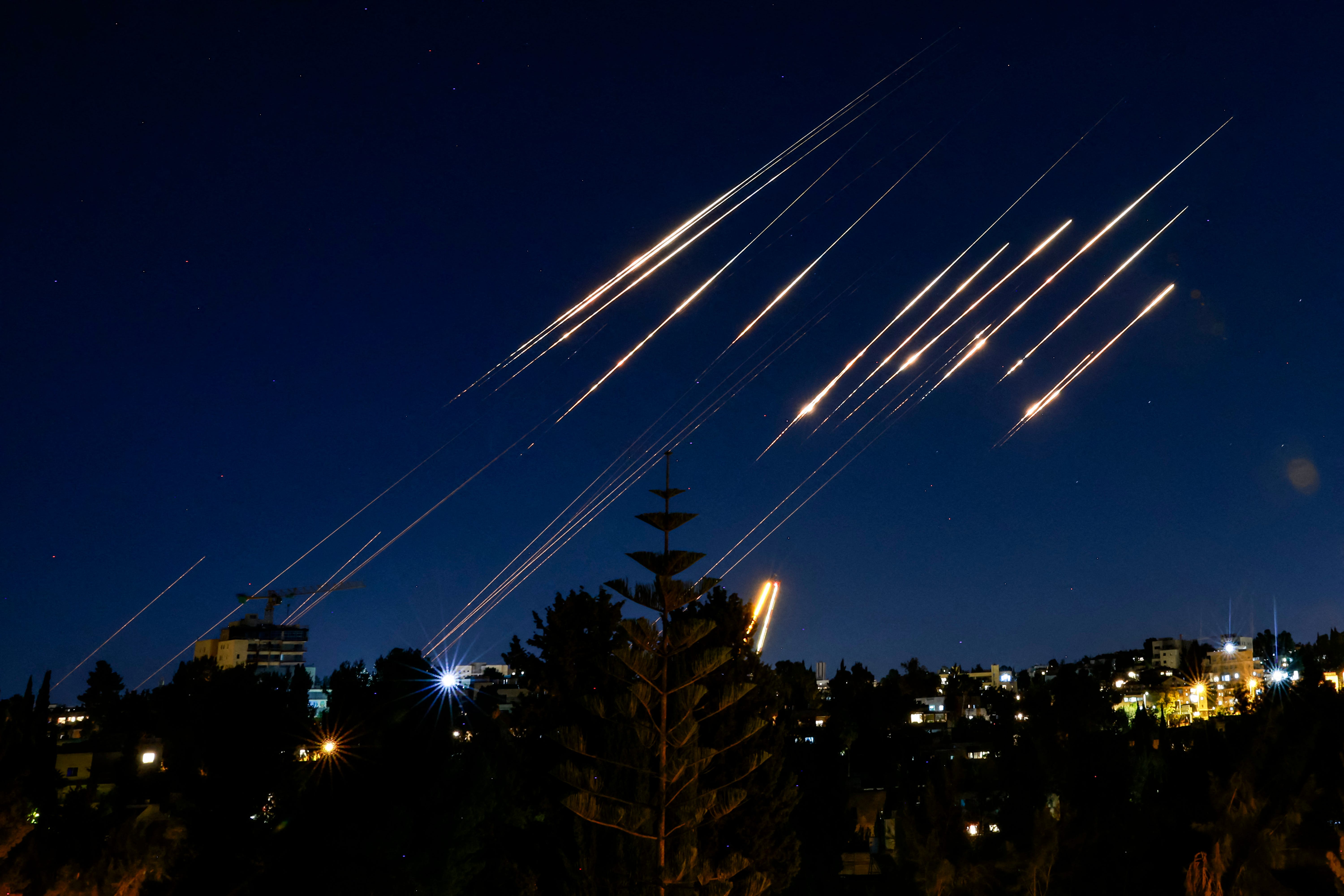
THE TWELVE DAY WAR: June 13, 2025 - June 24, 2025
June 13, 2025
Israel launches attacks on Iranian nuclear sites and other military sites, targeting military leaders and nuclear scientists. Tehran counter-attacks, striking Israeli targets with ballistic missiles. Strikes continue for the duration of the war.
“We struck at the heart of Iran’s nuclear-enrichment program,” said Israeli Prime Minister Benjamin Netanyahu. “We struck at the heart of Iran’s nuclear weaponization program. We targeted Iran’s main enrichment facility in Natanz. We targeted Iran’s leading nuclear scientists working on the Iranian bomb. We also struck at the heart of Iran’s ballistic-missile program.”
The IAEA was due to inspect a new enrichment facility at Isfahan on this date.
June 15, 2025
A sixth round of planned negotiations between Iran and the U.S. originally scheduled for this day are scuttled by the Israeli strikes. Energy targets, military infrastructure, and residential areas in Tehran are hit.
June 16, 2025
Trump writes on Truth Social: “Iran should have signed the ‘deal’ I told them to sign. What a shame, and waste of human life. Simply stated, IRAN CAN NOT HAVE A NUCLEAR WEAPON. I said it over and over again! Everyone should immediately evacuate Tehran!”
The prospect of war in Iran rattles some in the MAGA base. Influential Republicans, including commentator Tucker Carlson and Rep. Marjorie Taylor Greene, object to intervention in Iran.
June 17, 2025
Several new areas are added to the list of strike zones; 21 provinces have been affected thus far.
June 21, 2025
America strikes Iranian nuclear sites at Fordo, Natanz, and Isfaham. The strikes are dubbed “Operation Midnight Hammer,” and combine airstrikes and submarine-launched missiles.
“Iran’s key nuclear enrichment facilities have been completely and totally obliterated,” Trump said following the strikes.
The administration doubles down on that assessment — pushing back on stories about a Defense Intelligence Agency after-action report that concluded the sites had not been destroyed — with several statements on the White House website under the headline: Iran’s Nuclear Facilities Have Been Obliterated — And Suggestions Otherwise are Fake News.
Iran responded to the strikes by firing missiles at a U.S. base in Qatar, which were successfully intercepted after Iran gave the U.S. advanced notice of the attacks.
Notably, the U.S. deployed 100 to 250 Terminal High Altitude Area Defense (THAAD) interceptors during the conflict, representing some 20-50 percent of the Pentagon’s total inventory and raising concerns about munitions inventory for future conflict.
June 22, 2025
“It's not politically correct to use the term, ‘Regime Change,’ but if the current Iranian Regime is unable to MAKE IRAN GREAT AGAIN, why wouldn't there be a Regime change??? MIGA!!!” Trump posts on Truth Social.
June 24, 2025
A ceasefire between Iran and Israel goes into effect, ending the Twelve-Day War, but not before President Trump accuses both countries of violating it in the early hours of the deal, with particular ire toward Israel.
“I’m not happy with Israel. You know, when when I say, ‘Okay, now you have 12 hours,’ you don’t go out in the first hour and just drop everything you have on them ... We basically have two countries that have been fighting so long and so hard that they don’t know what the fuck they’re doing,” he said.
June 25, 2025
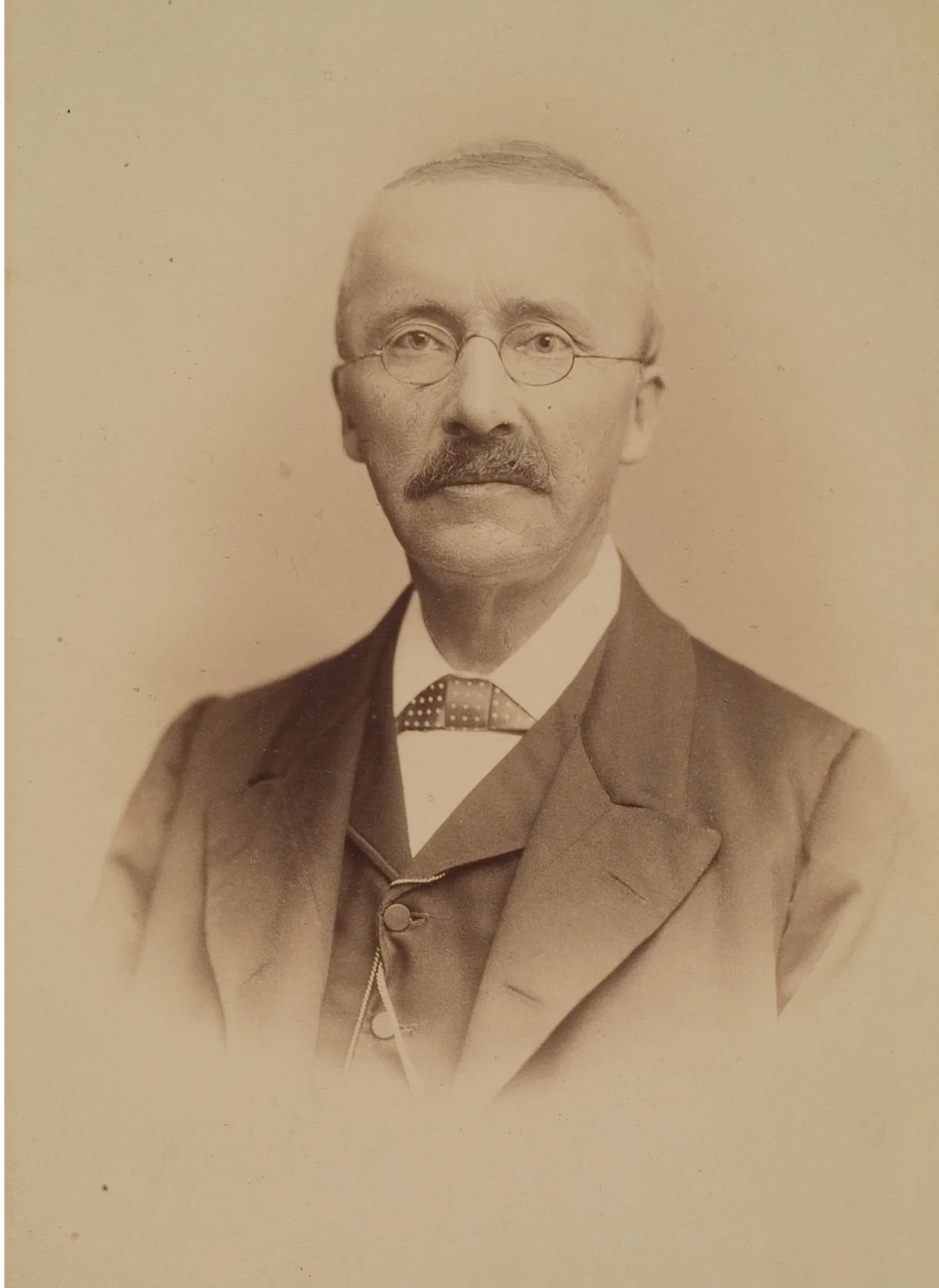
Seymour Hersh reports that Iran’s enriched uranium has been sealed at Fordow because the entrances were bombed, an idea inspired by Heinrich Schliemann, an amateur archeologist who, in trying to find the ruins of Troy, dug a trench that destroyed them.
“The solution that became policy—blockading any entrance to the nuclear site—arose because one member of the secret group remembered what he had learned, perhaps in college, about Schliemann’s Trench in Turkey,” he said. “Iran’s stockpile of enriched uranium may be intact, but it will be impossible to reach for many years, if ever.”
Another report by Hersh states that while critics of Midnight Hammer said the strikes may have failed to completely destroy centrifuges and left highly enriched uranium unaccounted for, the destruction of enrichment and conversion facilities at Isfahan meant Iran could no longer turn it into a usable bomb.
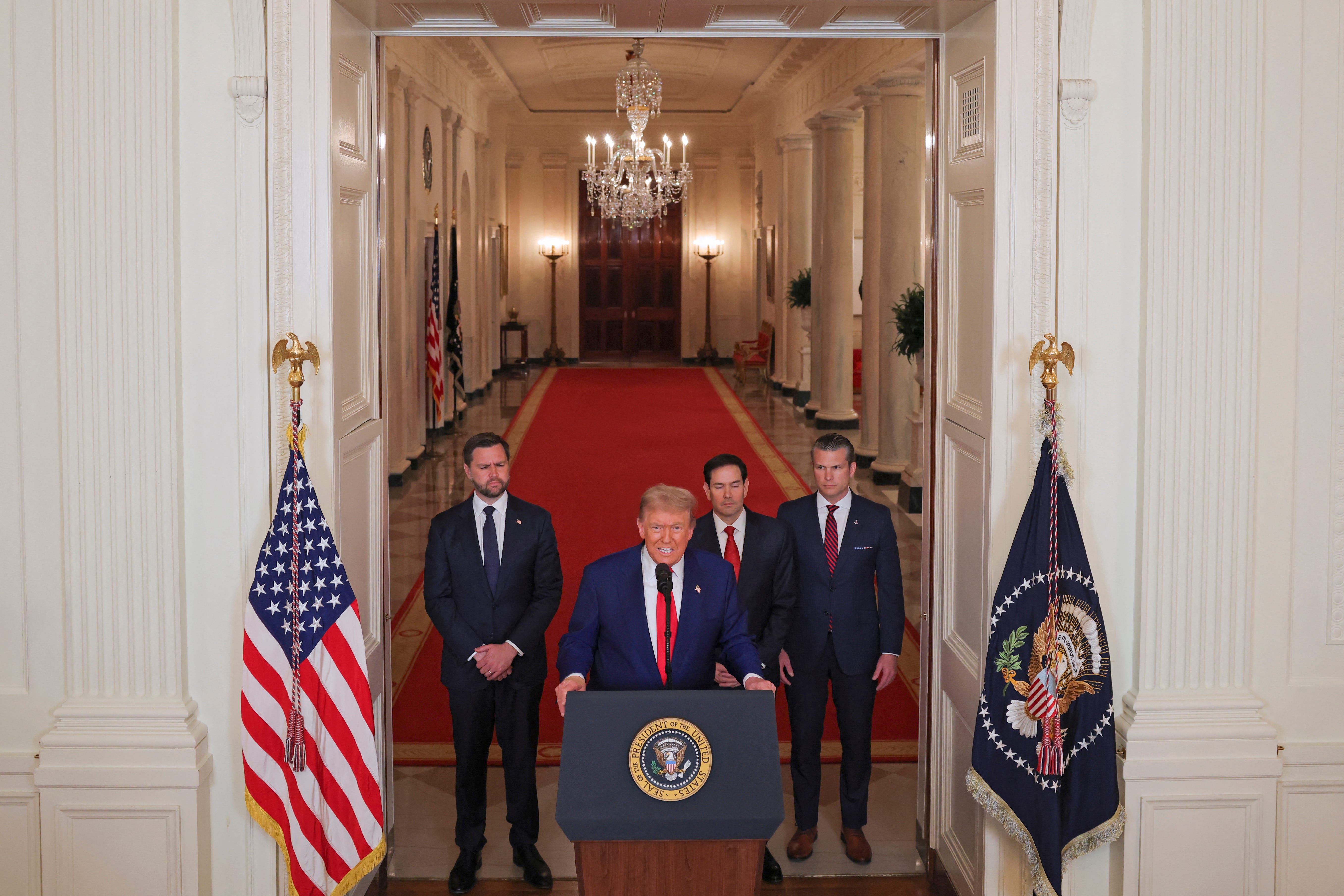
THE AFTERMATH: August 22, 2025 - December 4, 2025
July 2, 2025
The Pentagon claims U.S. strikes on Iranian nuclear facilities degraded Iran’s nuclear program by up to two years.
August 22, 2025
Iranian Foreign Minister Abbas Araqchi agrees to resume negotiations on nuclear and sanctions issues.
August 28, 2025
Britain, France, and Germany trigger a “snapback” mechanism under the 2015 JCPOA nuclear deal, reinstating the full suite of United Nations sanctions against Iran lifted over a decade previous.

September 9, 2025
Iran and the IAEA reach a deal to resume inspections of nuclear sites, include those bombed as part of Operation Midnight Hammer.
October 29, 2025
Grossi, director general of the IAEA, says in an interview with the Associated Press that inspectors using satellite imagery had not detected production of uranium but had seen movement around the sites where the stockpiles were buried.
November 2025
The 2025 White House National Security Strategy outlines a “predisposition to non-interventionism,” with a “high bar for what constitutes a justified intervention.”
The strategy also outlines “flexible realism”: a policy of “[seeking] good relations and peaceful commercial relations with the nations of the world without imposing on them democratic or other social change that differs widely from their traditions and histories.”
November 6, 2025
President Donald Trump reveals that Iran had requested Washington remove sanctions, and that he was “open to hearing” Iran’s requests.
November 12, 2025
The IAEA issues a report that says Iran is not letting its inspectors visit sites that the U.S. and Israel bombed during the 12-Day War.
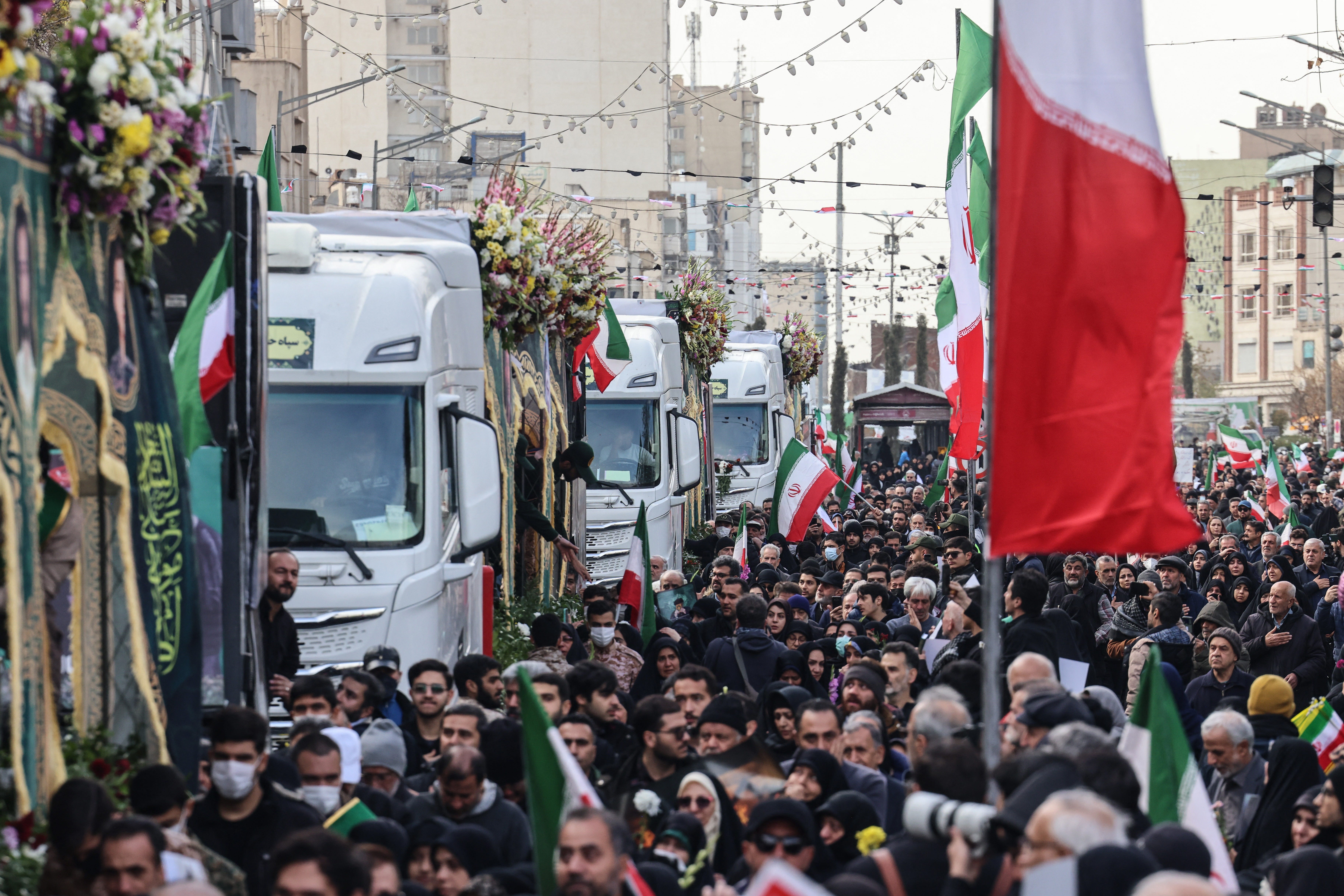
THE PROTESTS: December 29, 2025 - January 21, 2026
December 29, 2025
Protests erupt after shopkeepers rally in Tehran’s Grand Bazaar following a crash of the Iranian rial currency. Governor of the Central Bank of Iran Mohammad Reza Farzin resigns. The protests quickly spread to cities and towns across the country.
December 31, 2025
The Iranian government orders a one-day shutdown of 21 of Iran’s 31 provinces. President Masoud Pezeshkian appoints a new central bank chief. Arrests total 148. Seven fatalities have been reported since the start of protests.
January 3, 2026
Security forces kill at least 11 protesters. Ayatollah Ali Khamenei labels protesters “rioters” who “must be put in their place.” The IRGC declares that the period of “tolerance” is over, pledging to target “rioters, organizers and leaders of anti-security movements … without leniency.”
January 5, 2026
The U.S. State Department condemns Iranian security forces storming a hospital housing injured protesters, calling it a “brutal attack” and a “crime against humanity.”
January 8-10, 2026
The apex of Iran’s deadly crackdown on protests arrives.
Exiled crown prince and opposition leader Reza Pahlavi calls for nationwide protests, catalyzing a surge in activity.
Internet access is cut off in Iran. Iranian security forces launch an “unprecedented deadly crackdown,” with forces positioned on streets and rooftops “repeatedly [firing] rifles and shotguns loaded with metal pellets at protesters.”
Two senior officials of the Iranian Ministry of Health tell Time that as many as 30,000 people could have been killed on Jan. 8 and 9 alone. Amnesty International describes a “coordinated nationwide escalation in the security forces’ unlawful use of lethal force against mostly peaceful protesters and bystanders since the evening of 8 January.”
Senator Lindsey Graham directs a message to Khamenei on TV: “If you keep killing your people who are demanding a better life, Donald J. Trump is gonna kill you.”
January 13, 2026
Trump writes on Truth Social, “Iranian Patriots, KEEP PROTESTING - TAKE OVER YOUR INSTITUTIONS!!! Save the names of the killers and abusers. They will pay a big price. I have cancelled all meetings with Iranian Officials until the senseless killing of protesters STOPS. HELP IS ON ITS WAY.”
January 21, 2026
Iran’s prosecutor general declares “the sedition is over now,” as protests are largely suppressed. “This isn’t a threat, but a reality I feel I need to convey explicitly...The violence on our streets has subsided and normal life has returned nationwide.”
THE MARCH TO WAR: January 23, 2026 - February 28, 2026
January 23, 2026
President Trump announces an “armada” of U.S. warships is sailing to the Middle East, including the USS Abraham Lincoln aircraft carrier and its escort ships, squadrons of fighter jets and other aircraft, and some 5,000 personnel.
January 29, 2026
The European Union formally designates the IRGC as a terrorist organization in response to the mass killing of protesters. The EU simultaneously levies new sanctions against individuals and entities associated with the Iranian regime.
February 5, 2026
U.S. Treasury Secretary Scott Bessent describes economic levers used to catalyze Iranian protests during a congressional hearing.
“What we [have done] at Treasury is created a dollar shortage in the country,” Bessent said, describing a “grand culmination in December, when one of the largest banks in Iran went under … the Iranian currency went into freefall, inflation exploded, and hence, we have seen the Iranian people out on the street.”
February 6, 2026
Iran and the U.S. hold nuclear negotiations mediated by Omani Foreign Minister Badr al-Busaidi, the first round of talks since the January protests. Iranian Foreign Minister Abbas Araghchi described the meetings as a “good start,” and Trump called them “very good,” but warned “If they don’t make a deal, the consequences are very steep.”
February 12, 2026
IAEA chief Grossi tells a news organization associated with Iranian dissidents that “Western powers” have voiced concern about the fate of Iran’s nuclear material, but said the IAEA has a “firm impression” it remains buried underground.
February 13, 2026
The USS Gerald R. Ford aircraft carrier and its escort ships deploy to the Middle East, escalating a broader buildup of military assets in the region — the largest force in the region since the 2003 invasion of Iraq.
February 17, 2026
Iran and the U.S. hold a second round of nuclear talks in Geneva, Switzerland, again mediated by Oman, reportedly yielding agreement on “guiding principles,” according to Iran’s Araghchi. An American official said that “progress was made, but there are still a lot of details to discuss.”
February 19, 2026
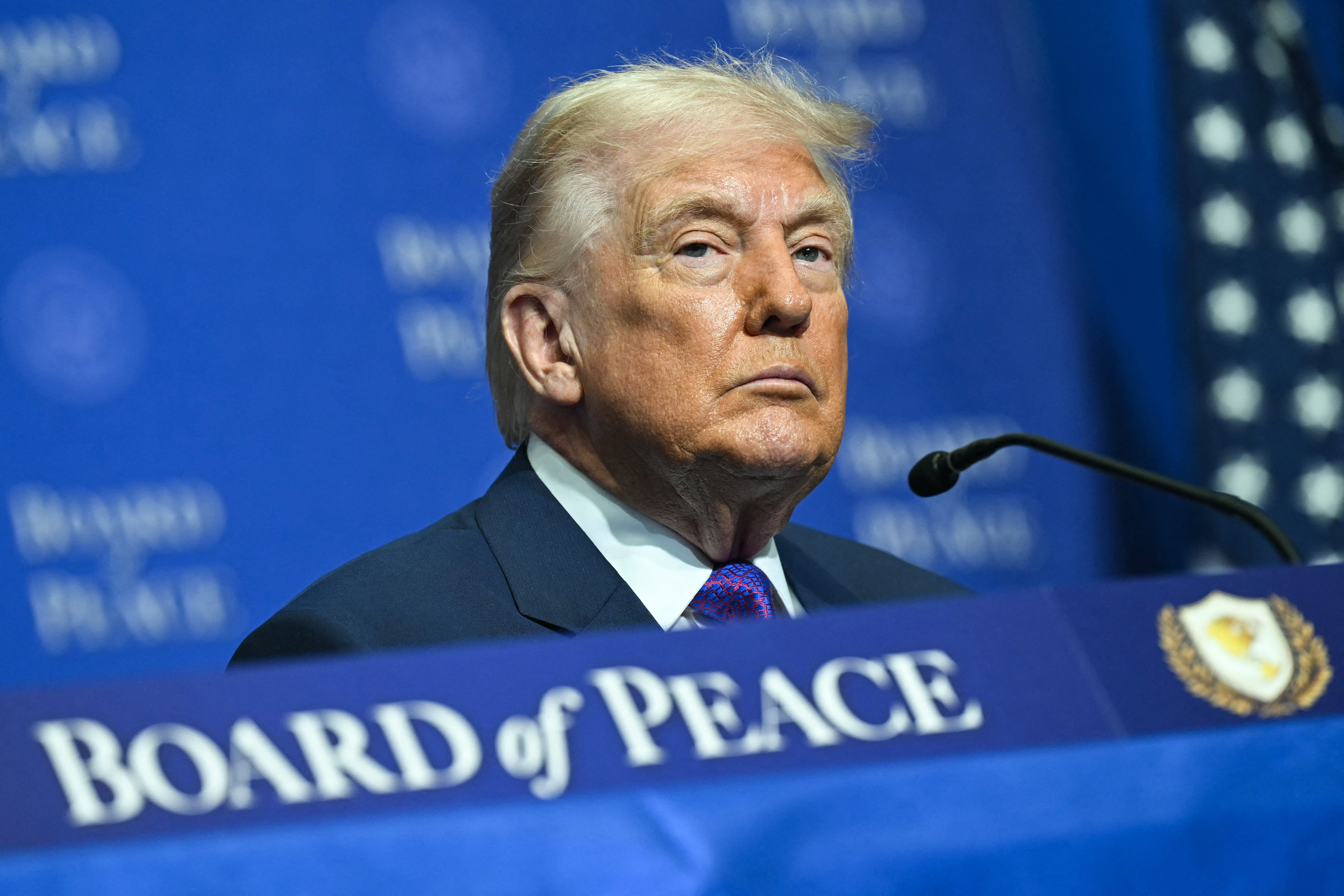
Trump hosts the inaugural meeting of the “Board of Peace,” where he says of Iran, “They cannot continue to threaten the stability of the entire region, and they must make a deal… bad things will happen if it doesn’t ... You’re going to be finding out probably over the next ten days.”
February 24, 2026
Trump delivers his fourth State of the Union address.
“We haven’t heard those secret words, ‘We will never have a nuclear weapon,’” he said. “My preference is to solve this problem through diplomacy. But one thing is certain, I will never allow the world’s number one sponsor of terror, which they are by far, to have a nuclear weapon. Can’t let that happen.”
“After Midnight Hammer, they were warned to make no future attempts to rebuild their weapons program, and in a particular, nuclear weapons, yet they continue starting it all over,” Trump said. “We wiped it out and they want to start all over again. And are at this moment again pursuing their sinister ambitions.”
Iranian Foreign Minister Araghchi writes the following: “Iran will under no circumstances ever develop a nuclear weapon; neither will we Iranians ever forgo our right to harness the dividends of peaceful nuclear technology for our people.”
February 26, 2026
A third round of U.S.-Iran nuclear negotiations takes place in Geneva, described as “most intense so far” by Araghchi. Omani Mediator al-Busaidi wrote following the session that “discussions on a technical level will take place next week in Vienna.”
February 27, 2026
Omani Foreign Minister al-Busaidi says that Iran will agree to the downgrading of highly enriched uranium for fuel, but that negotiators need more time. He clinched a promise from Iran for “full and comprehensive verification by the IAEA.”
“If the ultimate objective is to ensure forever that Iran cannot have a nuclear bomb, I think we have cracked that problem,” he said. “This is something that is not in the old deal that was negotiated during President Obama's time.”
“If you cannot stockpile material that is enriched, then there is no way you can actually create a bomb,” he said. “There is agreement now that [existing stockpiles] will be downblended to the lowest level possible and converted into fuel and that fuel will be irreversible.”
Iran Foreign Minister Araghchi says on a phone call with an Egyptian diplomat that the U.S. needs to drop its “excessive demands.”
An email sent to U.S. Ambassador to Israel Mike Huckabee tells embassy personnel who wish to leave Israel to “do so TODAY”.
Secretary of State Marco Rubio informs seven of the “Gang of Eight” — the top leaders in Congress overseeing intelligence issues — about impending strikes.
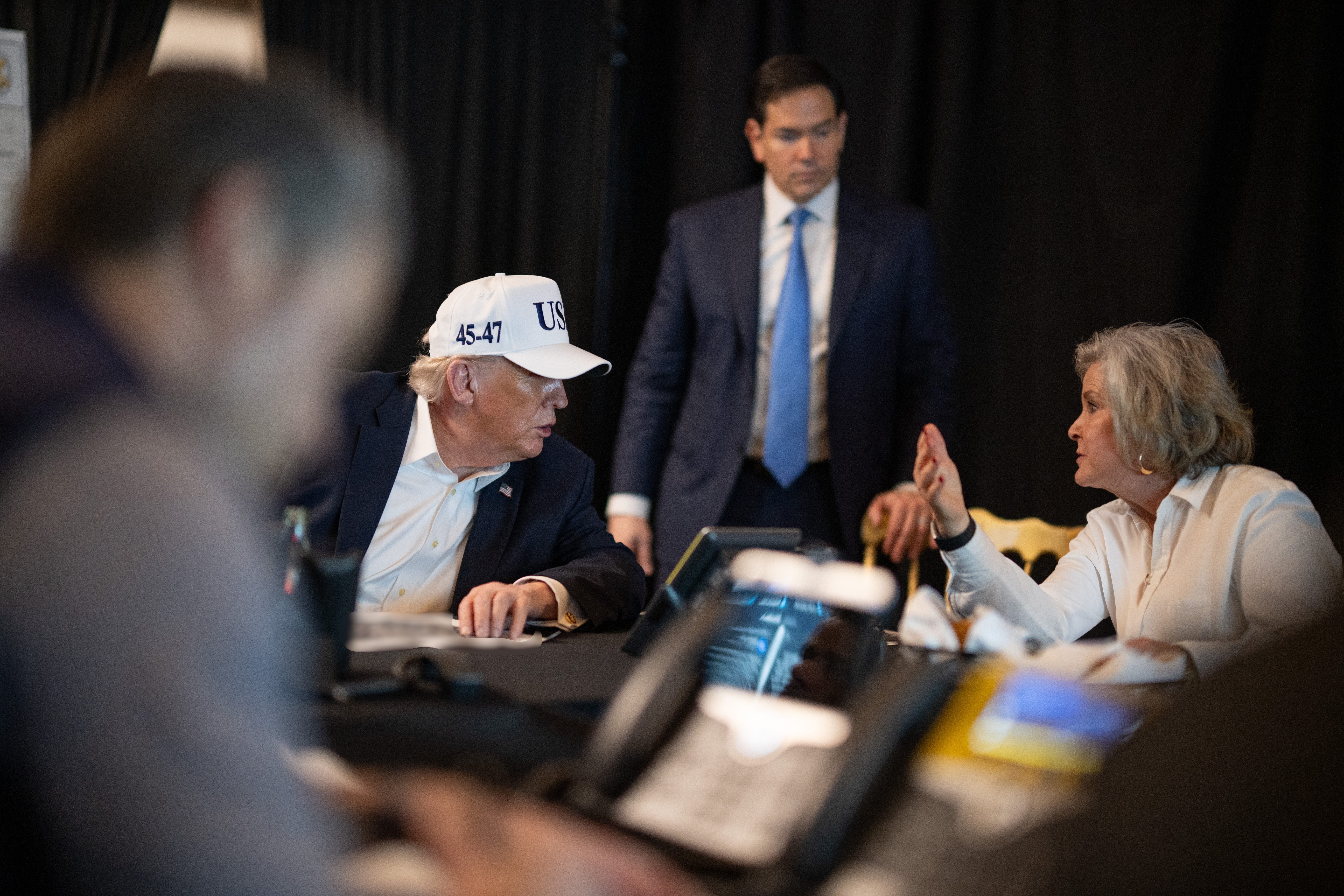
OPERATION EPIC FURY: February 28, 2026
The United States and Israel launch a joint operation targeting Iran.
2:16 AM EST - Explosions are heard in Tehran.
2:36 AM EST - President Trump releases a video announcing the operation, deemed “Operation Epic Fury” by the Americans. He recounts historical transgressions, including the 1981 hostage crisis and Oct. 7, 2023 attack on Israel, asserts that Iran must never be allowed to obtain nuclear weapons, and urges the Iranian people to “take over” the government.
2:47 AM EST - Exiled Crown Prince Reza Pahlavi releases a statement calling the operation a “humanitarian intervention,” and asserts that “even with the arrival of this aid, the final victory will still be forged by our hands.”
3:05 AM EST - AP - A connection blackout falls over Iran.
3:15 AM EST - AP - Explosions are heard in northern Israel.
3:28 AM EST - Israeli Prime Minister Benjamin Netanyahu releases a video announcing the operation, deemed “Operation Lion’s Roar,” by the Israelis. He says the aim of the operation is “to put an end to the threat from the Ayatollah regime in Iran,” cites an “unprecedented mass slaughter of its own citizens,” and claims Iran is rebuilding nuclear and missile capabilities.
Netanyahu claims the ongoing negotiations were a delay tactic, but that “the United States is not buying their lies.”
4:00-4:31 AM EST - AP - Explosions and missile attacks arrive in Syria, Lebanon, Kuwait, Qatar. The headquarters of US Navy’s 5th Fleet in Bahrain is attacked.
4:40 AM EST - Iran’s Foreign Ministry releases statement dubbing the operation “criminal military aggression,” states the United States and Israel attacked “a series of targets, defense infrastructures, and civilian sites in various cities,” and notes the attacks came in “the midst of a diplomatic process.”
5:42 AM EST - AP - The Iranian state-run IRNA news agency claims 40 were killed in a strike at girls’ school in southern Iran.
5:49-6:47 AM EST - AP - Qatar says it has repelled multiple rounds of Iranian missiles.
6:56 AM EST - AP - Interceptions seen from Tel Aviv.
7:24 AM EST - Canadian Prime Minister Mark Carney releases statement in support of U.S.-Israeli strikes.
7:30 AM EST - AP - Jordan says it has repelled two ballistic missiles.
8:59 AM EST - UK, France and Germany release joint statement calling for resumption of nuclear negotiations, noting non-participation in the strikes, and condemn Iranian attacks on countries in the region.
9:15 AM EST - Iranian Foreign Minister Abbas Araghchi calls the regime change operation “Mission Impossible” in an interview with NBC News, citing supposed popular support for the “so-called regime.” He said there were no communications between Iran and the U.S. He said that Iran is interested in deescalation, yet also stressed that the U.S. will “pay.”
The president of a country, no matter how powerful, has no right to determine another country’s leadership, he said.
9:35 AM EST - China calls on for an “immediate stop of the military actions” and resumption of negotiations.
9:43 AM EST - British Prime Minister Keir Starmer releases a statement calling Iranian response “indiscriminate,” notes the United Kingdom had “no role” in the operation, describes the regime in Iran as “utterly abhorrent” which “poses a direct threat to dissidents and to the Jewish community,” and says “it is clear they must never be allowed to develop a nuclear weapon.” Also notes British planes are “in the sky today, as part of coordinated, regional, defensive operations.”
9:45 AM EST - AP - The Saudi capital is targeted by Iran.
10:56 AM EST - Ukrainian President Volodymyr Zelenskyy releases statement condemning Iranian support for Russia in its war against Ukraine, and says “it is only fair to give the people of Iran the opportunity to rid themselves of the terrorist regime.”
11:07 AM EST - AP - The Israeli military says that “dozens” of missiles have been fired by Iran at Israel.
12:59 PM EST - AP - The Israeli military says some 200 fighter jets participated in the initial attack on Iran. The attack struck some 500 targets that included air defenses and missile launchers.
1:00 PM EST - AP - Iranian state TV reports more than 200 people killed.
3:05 PM EST - AP - Iraqi protesters take to streets of Baghdad in support of Iran.
3:36 PM EST - AP - Israeli officials tell AP that Iran’s Supreme Leader Ayatollah Ali Khamenei is dead. Neither Iran nor the US have confirmed. Trump later tells NBC news, “We feel that that is a correct story.”
4:05 PM EST - AP - An Israeli military spokesperson claims strikes also killed other senior Iranian officials, including the commander of the Islamic Revolutionary Guard Corps, the defense minister, the head of Supreme Leader Ayatollah Ali Khamenei’s military bureau and the secretary of Iran’s Supreme National Security Council.
4:37 PM EST - President Donald Trump announces the Supreme Leader of Iran, Ayatollah Ali Khamenei, is dead.
“[T]here was not a thing he, or the other leaders that have been killed along with him, could do. This is the single greatest chance for the Iranian people to take back their Country ... The heavy and pinpoint bombing, however, will continue, uninterrupted throughout the week or, as long as necessary to achieve our objective of PEACE THROUGHOUT THE MIDDLE EAST AND, INDEED, THE WORLD!”
Given most of this is old news, I would much prefer to hear Matt and Walter discuss this Monday afternoon (or Sunday for a special show). And since I have been following various good sources all day, even today's events are old news. It would have also been interesting to have heard what they had to say on Thursday (released Friday morning) given that this was coming bigger than shit. Given that, it is a useful timeline, but nothing unique. This news is available elsewhere for those interested (just like the overabundance of Epstein info). What we can't get elsewhere is ATW or Matt's writing, all of which included obvious "takes." Which is why he is/was a great writer.
It is absurd to ignore suitcases of cash to iran, probably the most disgraceful act in American history since the democrat party rebellion of 1861 (until biden appeared).