

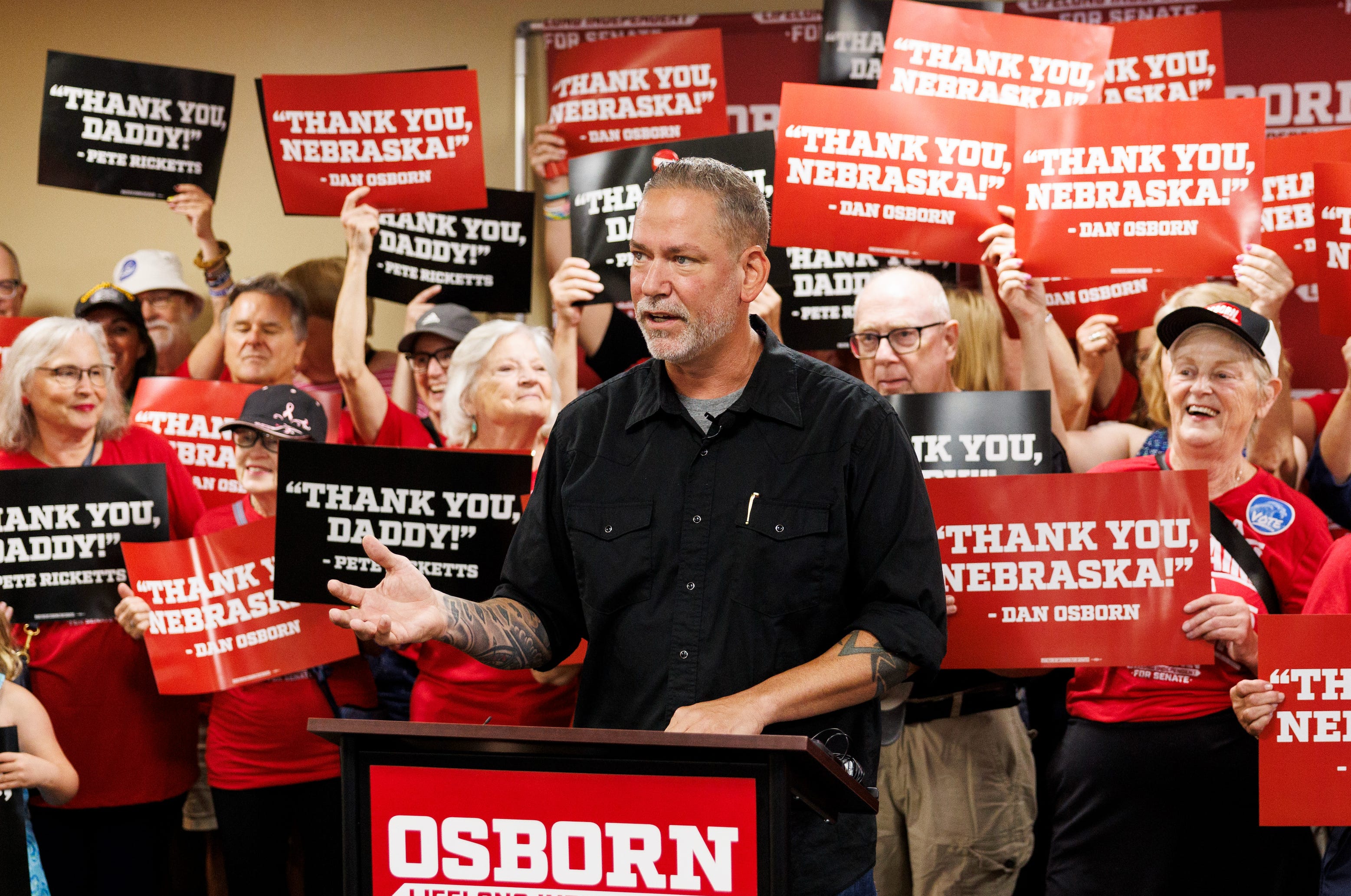
Had a chuckle reading the New York Times story this morning about Nebraska Independent Senate candidate Dan Osborn, whose interesting take on the two traditional parties is, “I think they both kind of suck.” The Times is stroking Osborn for the same reason the Democratic Party is promoting him — he’s running against Republican Pete Ricketts. Which is fine, and logical, but this was funny:
Off the stump, Mr. Osborn passes the political test of a guy you’d like to have a beer with. He is loose, chatty, goofy and prone to saying stuff that would give the average campaign consultant a heart attack.
What a blast from the past! The New York Times hasn’t pulled out the infamous “beer test” for a political candidate since May 22, 2015, when it ran this story:
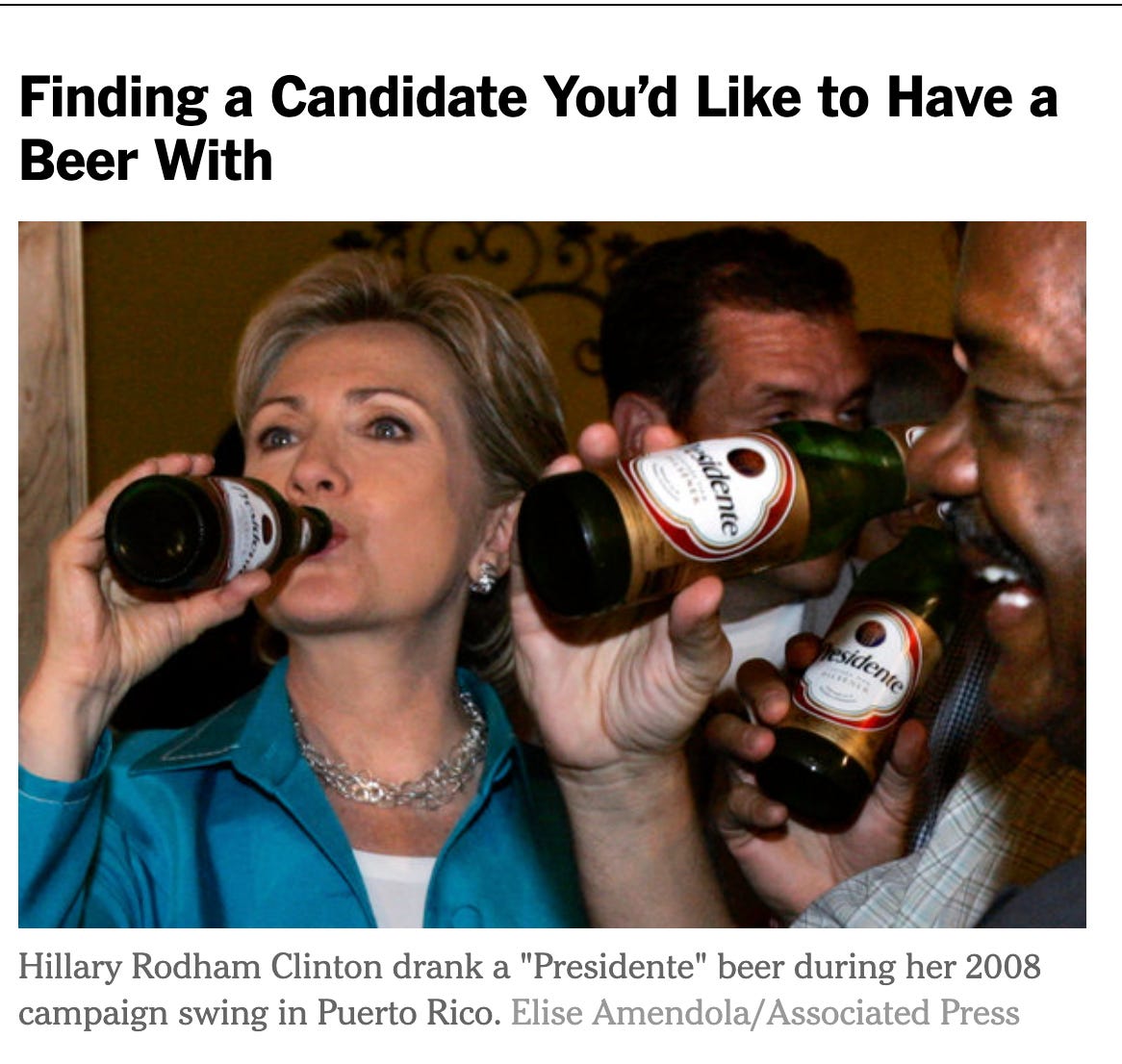
The “beer test” was once a massively overused campaign reporting cliché. It grew out of a Sam Adams ad campaign in the 2000 race, and from Bush-Gore through the 2016 cycle it was nearly impossible to escape “beer test” coverage. Then Donald Trump won the 2016 beer test by default — it was hard to imagine Hillary Clinton having a beer at all — leading even Slate to pronounce “there has never been and perhaps never will be a candidate you’d be more eager to have a beer with than Donald Trump.”
When Trump won, it led pundits to rush out pieces explaining the beer test is no bueno, especially in races involving female candidates, and therefore “it doesn’t matter which candidate you’d rather have a beer with,” as ABC proclaimed during the 2024 cycle. Writers like Yascha Mounk of the Atlantic by then had already tried introducing a replacement called the “Inverted Likeability Test.” It never caught on.
To trace the history of this goofball campaign reporting crutch is to take a short cut through the last 25 years of irrational political pathologies. Originally — I saw this with my own eyes— the beer test was a way for campaign reporters to flex during campaign seasons, since they were usually the chief arbiters of which candidate was beer-i-er than the next.
CBS even used beer as a reverse indicator for “weirdness,” which the network said was disqualifying, as Pat Robertson, Ross Perot, Dennis Kucinich, Bob Kerrey, and Mark Sanford — all, they said, were at least a little flaky, and “none have passed the have-a-beer-with test.”
Beer started as a battering ram campaign pundits used against liberal candidates, then in the post-Bush era reporters used it to argue for Barack Obama. Post-Trump, blue-leaning campaign writers abandoned the beer test as a standard story element but revived it periodically to argue for certain candidates, even trying to shove beers in the hands of Kamala Harris. This was ironic on several levels, beginning with the fact that she usually looked in the bag whether holding a beer or not. The Stephen Colbert episode of October 2024 was a heavily-publicized dose of awkward:
The beer test has mainly vanishedsince 2016 because beer itself has become a stand-in for unredeeming deplorable values. Democratic male candidates stopped bothering with beer and instead tried tactics like livestreaming a haircut (Beto O’Rourke) or going on the “most extreme” state fair ride with a daughter (that was Tim Walz, who also tried blowing his balls off in a hunting video). After Elizabeth Warren torpedoed her campaign by trying to livestream a home scene that ended with her husband turning down an offer to “have a beer with” her, the Washington Post angrily decried America’s “preoccupation” with beer as a “barometer” for likeability. Why not, they suggested, quote a voter who’d commend Warren for having “fun aunt energy”? (We did not subsequently have “fun aunt” polling.) DSA candidates haven’t called for abolishing beer, but it’s absent from their messaging — though one Times profile described a “Building Working Class Solidarity” meeting they held over “$7 beers.”
Now, thanks to an odd edge case in which Democrats can root for an Independent without endorsing heteronormative leisure tendencies, the beer test today made a return in the New York Times after an 11-year absence. In the scheme of things, unimportant, but man is this country weird sometimes.
Politics suck because politicians suck, so why would people want to drink a beer with a sucky politician acting like a regular guy? If he were a regular guy, then he wouldn't be in politics.
In his novel, Dune, Frank Herbert revealed a truth about why governments will always be corrupt:
"All governments suffer a recurring problem: Power attracts pathological personalities. It is not that power corrupts but that it is magnetic to the corruptible."
They miss the point. What you want to know is what happens somewhere around the fourth beer.