

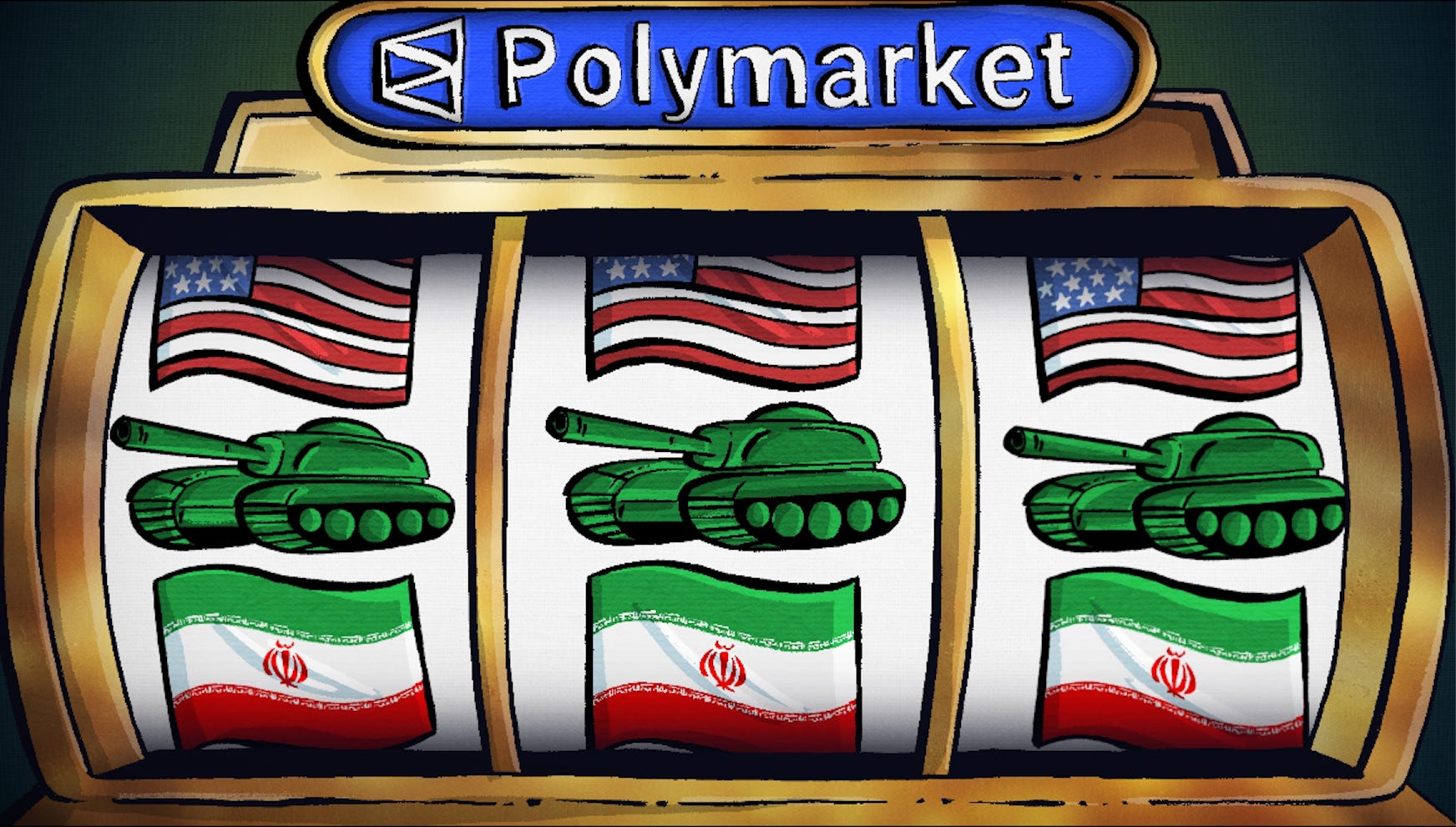
Fun fact: More money flowed through the prediction market Polymarket on the timing of the U.S. government’s recent attack on Iran than was bet on this year’s Super Bowl with Nevada’s sportsbooks.
Bettors traded more than $529 million in forecasts of when the U.S. would next strike Iran in a market opened last year on Polymarket, the self-described world’s largest prediction market. Bets on Polymarket are made with cryptocurrency, and each trade is countered by another user, so not exactly versus “the house.”
By contrast, $133.8 million was bet on last month’s Super Bowl across Nevada’s 186 sportsbooks, representing a 10-year low, according to data from the Nevada Gaming Control Board.
Prediction markets differ from traditional gambling in other notable ways. A pattern keeps emerging after the fog of war clears battlefields in the Middle East, Latin America, and Europe.
In the final hours before a world leader is killed, kidnapped, or claims territory, bettors swoop in and place anonymous wagers that correctly predict the future.
Hundreds of thousands to millions of dollars change hands, with winners paid in cryptocurrency that’s logged publicly, but mostly obscures the identities behind the accounts.
The world seems on the verge of chaos. And in the warrior casinos of online prediction markets, business is booming, surging past activity in Las Vegas’ physical casinos, and stealing the thunder of popular sportsbooks that have designs on taking over professional entertainment.
While not a perfect apples to apples comparison — Polymarket’s geographic boundaries are far wider than the landlocked Silver State — the prediction markets are where the instantaneous action is.
A surge in bets correctly predicting the late-February Iranian strike flooded Polymarket just before the attack. More than 150 accounts wagered at least $1,000 the day before America took action and got it right, according to a New York Times analysis of the platform’s data since June 2025.
The late swell of winning bets was unusual, according to the Times, which found at least 16 accounts made more than $100,000 after placing bets on the eve of the attack and more than 100 accounts cashed out over $10,000.
One lucky gambler spent more than $60,000 in the final moments before the attack and made almost $500,000. The anonymous account was opened in February, potentially within days of the attack.
Polymarket is far from the only prediction market offering bettors the opportunity to wager on world events. Kalshi offered odds on the ouster of Iran’s supreme leader before the recent military strikes, but later suspended trading amid his death and said on X that, “Kalshi does not offer markets that settle on death.”
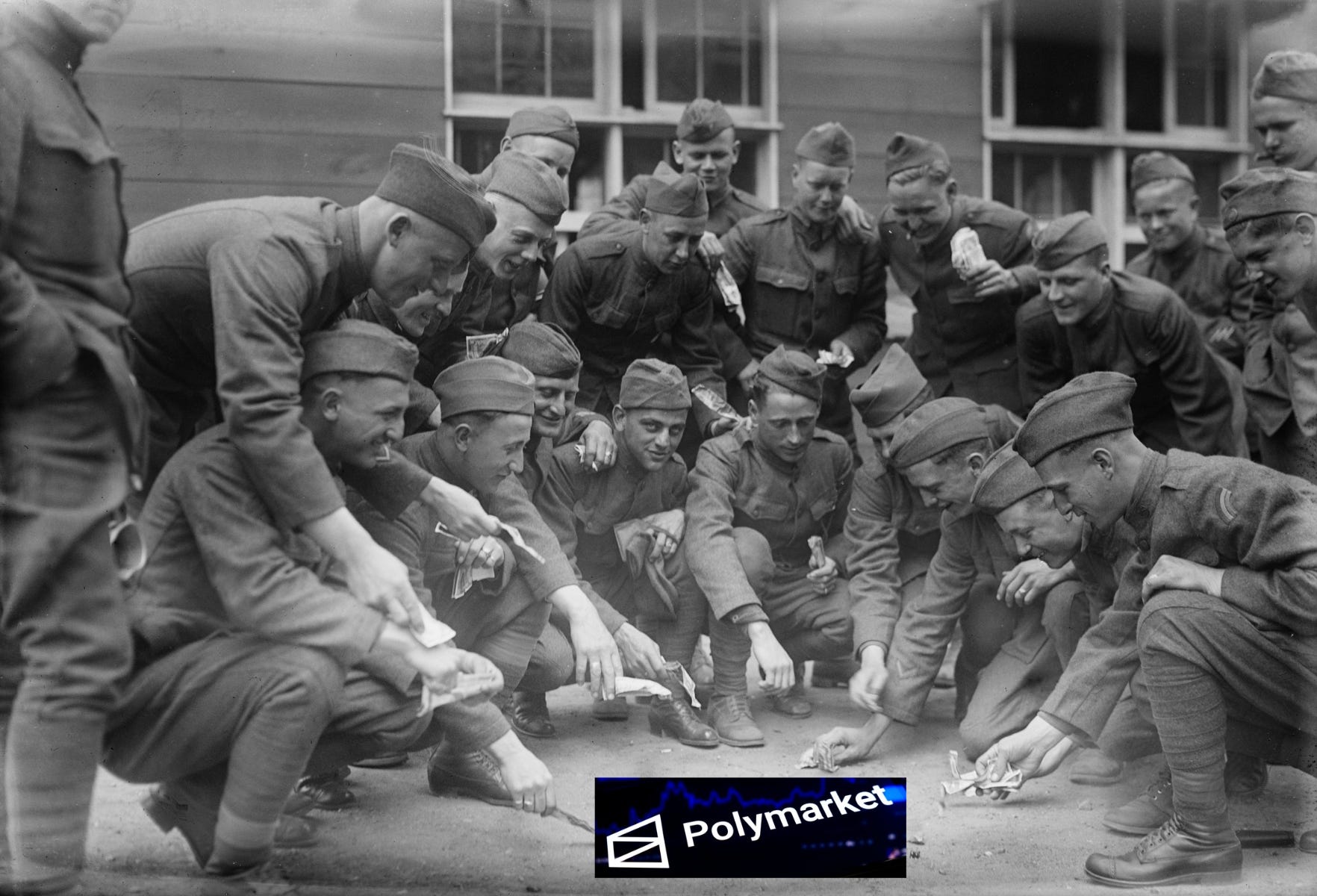
Certain specialized markets have irked some working in the professional gambling industry.
John Murges, a sports betting professional who got started working with the mob in Chicago, has seen it all in the gambling underworld but did not wager he would see bets on combat in the open.
As a young man, he collected and paid out tens of thousands of dollars to Chicagoans betting on Cubs baseball and Bears football games in the 1980s and 1990s before gambling went mainstream amid legalization.
Murges emphasizes he was not a made man in the Italian mafia — he’s Greek after all — and he has put distance between his old life and his newer efforts as an experienced professional handicapper.
He said the prediction markets offering bettors contracts involving the timing of killings in Iran was “pretty morbid” and questioned whether an insider was involved. The 11th-hour bets do not sit right with him.
“I’ve been in this business a long time,” Murges said. “In the sportsbook industry, they would call that suspicious activity.”
When those who know the Chicago outfit’s work intimately think you have gone perhaps too far, that’s just a sign the prediction markets are ready to double down.
Polymarket defended its willingness to offer trades on the Iran strikes in a note saying it was harnessing “the wisdom of the crowd to create accurate, unbiased forecasts.”
The company said its prediction markets can give people answers in ways “TV news and 𝕏 could not.”
Polymarket’s position echoed a view of the promise of prediction markets from a 2006 edition of the U.S. intelligence community’s professional journal “Studies in Intelligence.” Prediction markets had the potential to “improve analytical outcomes” for the intelligence community, including policy about the Iraq War, according to author Puong Fei Yeh, then identified as a consultant.
Taking bets on strikes that could spark World War III was not an ethical red line for Polymarket, but thermonuclear war might be. Polymarket subsequently permitted a betting market on the timing of a “nuclear weapon detonation” before removing it amid pushback on social media.
Intense scrutiny and pressure is mounting worldwide on those trading information or attempting to manipulate world events for profit on the prediction markets.
Israel indicted a military reservist and a civilian last month for using secret information while placing bets on military operations last year.
Asked if it too was investigating potential insider trading on American military operations, the FBI told Racket it “neither confirms nor denies an investigation and we decline to comment further.”
Policing every individual action on the prediction markets is proving impossible. And some institutions look to prefer handling the matters internally.
The Institute for the Study of War scrubbed the name of one of its geospatial researchers from its website amid reporting suggesting the think tank’s map of disputed territory in the Russia-Ukraine conflict was erroneously edited in a way to spark a payout on Polymarket, according to the Quincy Institute’s Responsible Statecraft.
Some bettors reportedly stood to gain a major profit, as much as 33,000%, on Polymarket if Russian forces took the town Myrnohrad in Ukraine in November 2025.
The betting market relied on the D.C. think tank’s interactive map, which was quietly edited to erroneously show Russian forces advancing in the town, prompting Polymarket to resolve the bet and pay out the winnings, according to 404 Media.
ISW acknowledged an “unauthorized and unapproved edit to the interactive map of Russia’s invasion of Ukraine” in a statement on its website soon thereafter but did not explain the cause of the change nor mention the prediction market effects.
ISW did not respond to request for comment, but Responsible Statecraft said the think tank appeared to have fired an unnamed staffer.
Polymarket is looking to improve upon any reputational damage it may have suffered by partnering with Palantir, the software behemoth born from the CIA’s strategic investment fund In-Q-Tel. Last week, Polymarket announced a new partnership with Palantir and TWG AI to develop a “next-generation sports integrity platform” designed to promote trust, transparency, and reliability.
Palantir’s support of the U.S. military and intelligence community has put a target on its back from Iran, where the war looks to have boosted its stock price. Palantir does not have any hesitation about openly profiting from its enemies’ death.
“Palantir is here to disrupt and make the institutions we partner with the very best in the world and, when it’s necessary, to scare our enemies and, on occasion, kill them,” Palantir CEO Alex Karp enthusiastically told shareholders last year. “We hope you’re in favor of that, we hope you’re enjoying being a partner.”
Fortune favors those wanting to enter the prediction market arena. The sportsbook DraftKings is adjusting its plans to dominate the prediction market industry and President Trump’s Truth Social media platform is preparing its own prediction market for things such as politics, the price of oil, and sports.
Congress, however, is preparing to intervene.
Rep. Ritchie Torres, New York Democrat, introduced legislation last month seeking to prohibit federal officials from buying, selling, or exchanging market contracts tied to government policy, action, and political outcomes.
Torres said in January his Public Integrity in Financial Prediction Markets Act was motivated by a $400,000 payout collected from someone who bet roughly $30,000 on Polymarket to predict Maduro’s capture hours before America’s raid in Venezuela. The bill has attracted more than 40 cosponsors, all Democrats.
Following the prediction market payouts over the Iran strikes, Democratic Sens. Jeff Merkley of Oregon and Amy Klobuchar of Minnesota said last week they were crafting a new bill to block the president, vice president, and other officials from trading event contracts.
Merkley cited bets on Iran and Venezuela as having the “unmistakable stench of corruption” and said the End Prediction Market Corruption Act would crack down on potential insider trading. Merkley also sponsored a congressional stock trading bill last summer.
But betting big on war is not exactly a new phenomenon and the outcomes are far from guaranteed, as America’s enemies found out the hard way 250 years ago.
Over drinks at Brooke’s in London on Christmas Day, 1776, legend has it British Gen. John Burgoyne bet a colleague 50 guineas he would return by the following Christmas having squashed the American patriots’ rebellion.
Instead, Burgoyne became a loser carrying the “stench of failure” upon surrendering his army after the Battles of Saratoga, which the U.S. Department of War has branded the “turning point” in the American Revolutionary War.
The tyrannical redcoats learned a lesson some Americans now wish to maintain: the house always wins except in the warriors’ casino, where Uncle Sam does.
Disclosure: Polymarket has partnered with Substack, providing new tools tailored for writers and publishers. While Racket News accepted the partnership, it declined the money in accordance with our mission that we accept zero dollars in outside financing.
"Disclosure: Polymarket has partnered with Substack, providing new tools tailored for writers and publishers. While Racket News accepted the partnership, it declined the money in accordance with our mission that we accept zero dollars in outside financing."
This needs a lot more explanation and sounds like a story itself.
What does "Racket News accepted the partnership" exactly mean?
How much money was offered to you, and who exactly made the offer and what did the offer exactly entail. Please provide exact dollar amounts and what actions were required of Racket in order to be paid.
The text you posted above makes it sounds like you took the deal but not the money.
Selling out for free really is missing the point completely.
I foresee a future where people, looking back to these days, will smile and shake their heads at Polymarket and cryptocurrency. The way we now look look at Madoff and Ponzi and tulip bulbs.
I had a back-and-forth with Grok about Polymarket. I couldn't see any value add whatsoever. Grok told me it was useful for hedging and fast information dispersal. I allowed as we already have tools for hedging and a move in Polymarket would be precisely the same as a move in the underlying commodity. Grok agreed. When I asked why I got such a rosy response to my first request, Grok told me the response came from the marketing propaganda of Polymarket and its supporters, not any kind of analysis.