

On July 20, 2022, Quartz published an article titled, “A new dashboard tracks real-time extremist hate online,” above a scary photo of tiki-torch-bearing supremacists at Charlottesville:
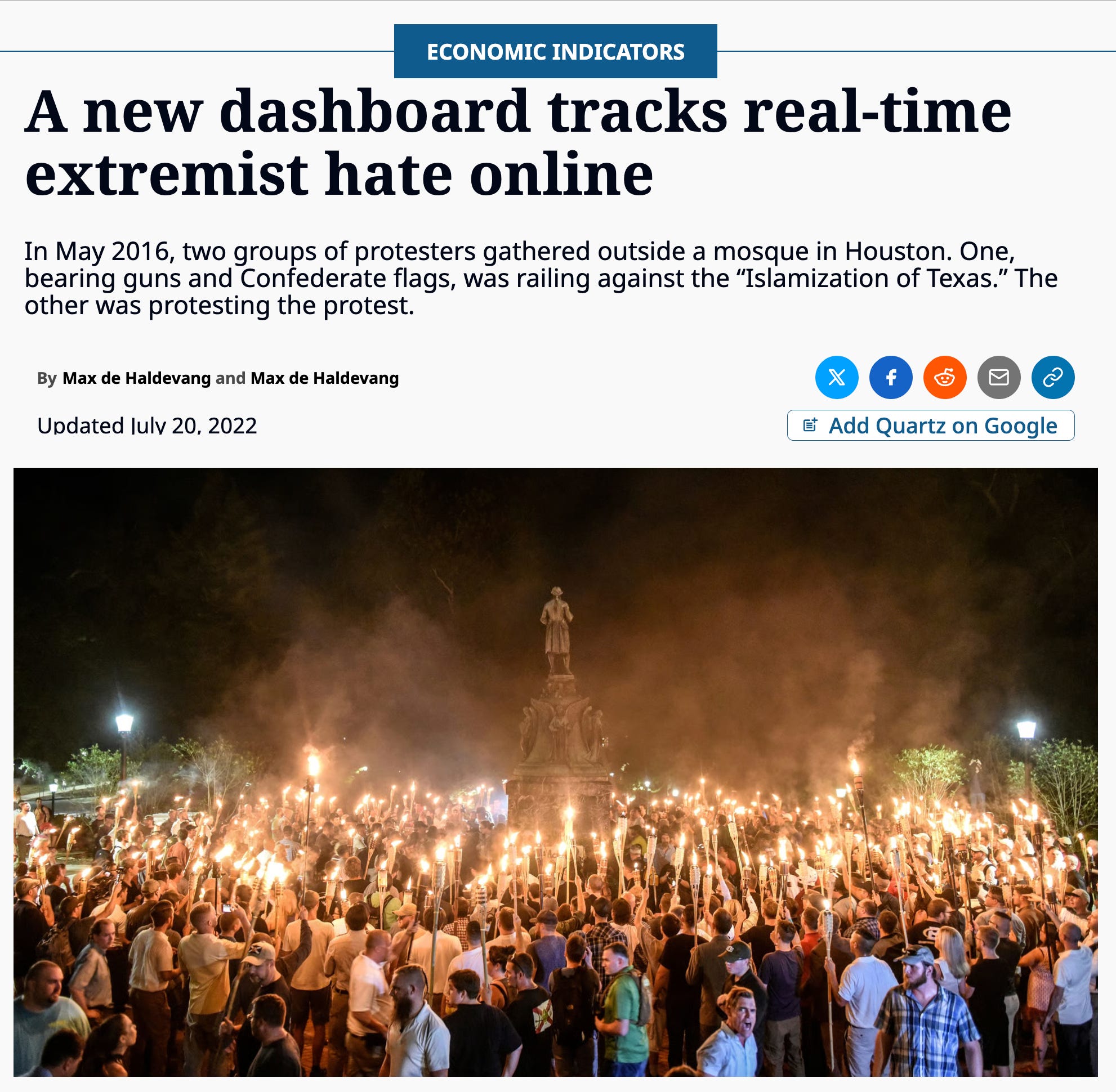
The article cheered the launch of “Exploring Hate Online,” a new tool launched by the Google-and-taxpayer-funded New America Foundation in conjunction with the Anti-Defamation League. The new digital tool aimed “to give new insight into how this kind of manipulation… spreads online” by “monitoring over 1,000 of the most active extremist accounts on Twitter.” The article noted the new tool worked “in a similar way to Hamilton 68, a dashboard… which shows analysts what Russia-linked Twitter accounts are focusing on.” It wasn’t similar to Hamilton 68, it was the same:

“Exploring Hate Online” shut down within a year, though it had been planned for at least four. While investigating Hamilton 68, which was discovered in Twitter Files correspondence to be an elaborate media hoax, I found correspondence from 2018 between concerned Twitter executives about the New America tool. It too was designed by the same person who designed Hamilton 68, only this time in conjunction with the ADL and the Southern Poverty Law Center:

We don’t know if the SPLC remained on board with the project (it appears not), but the fact that it was even involved in the early discussions is notable, as is their other correspondence in the Files, which has now been indicted for another kind of fraud.
The SPLC and its “Hatewatch” monitoring program appear regularly in the Twitter Files and other documents this site has covered over the years. For instance, they’re in the files of the CTI League, an early group put together by a cohort of ex-intelligence and defense officials to manipulate information around the Covid crisis and combat “Fox News Snorters” and “whackadoodles.” CTI advised members — also coached to adopt sock-puppet identities — to send online inquiries about “non-COVID misinformation” to the SPLC:

The same CTIL members were trained to use a group of “counter” techniques originally called AMITT but later called DISARM that involved tactics like “cultivate ignorant agents,” by which they meant encouraging undereducated figures who’d defame their own movements. Targets here included leftists hostile to globalism and nationalists against immigration:

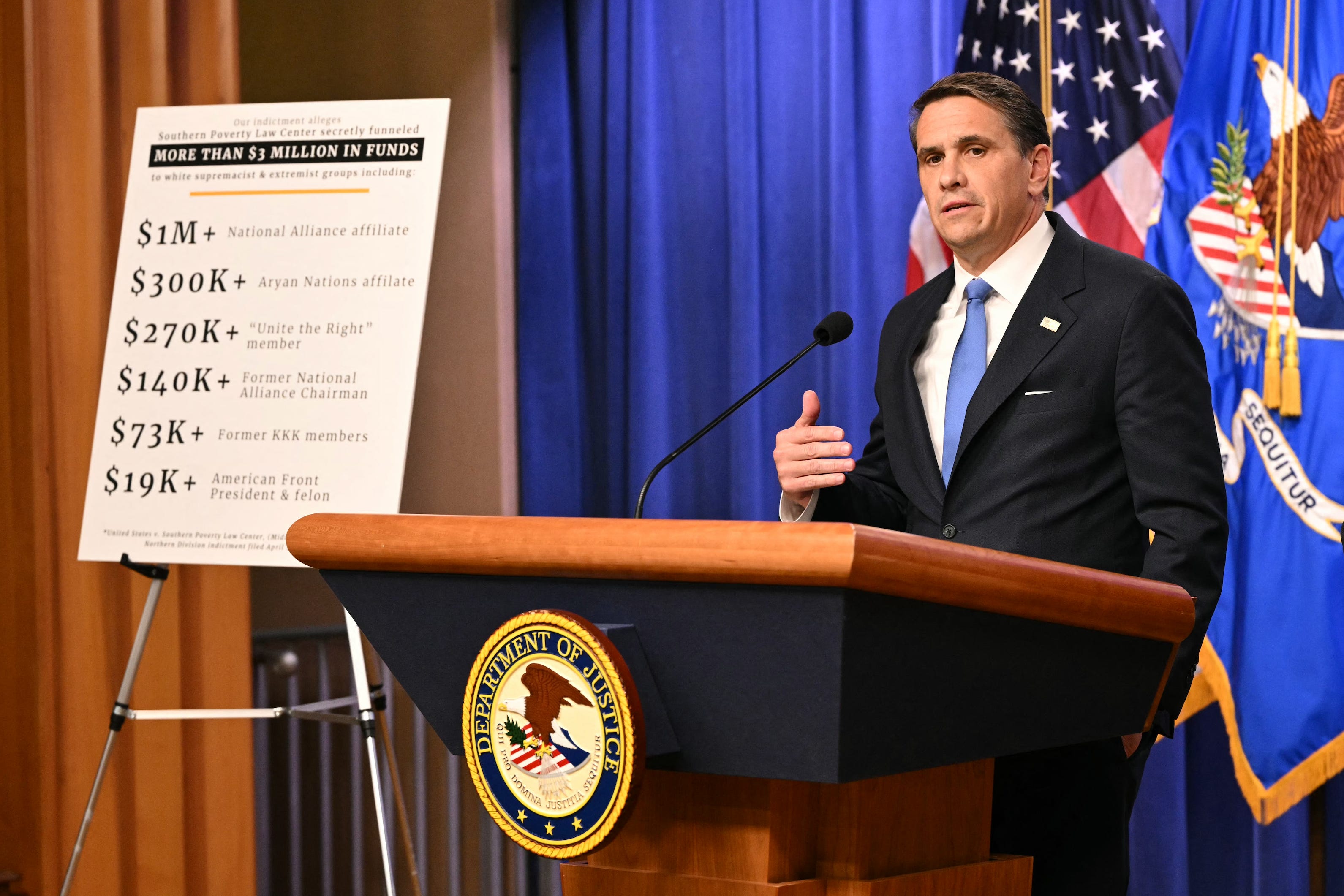
Exploring Hate, Hamilton 68, and CTIL all used digital techniques to exaggerate threats for political and financial reasons. It shouldn’t be a big revelation, but NGOs and politicians that fundraise on images of hate or hate speech — Twitter complained that “SPLC-type organizations” were at the forefront of demanding they censor — are massively incentivized to overstate or even concoct their “work product.” Though the SPLC’s indictment this week for paying members of hate groups is still just a list of unproven charges at this stage, there are now enough of these incidents to ask if America is really as steeped in hate as many institutions say.
In the digital age, a little bit of fraud goes a long way. The hate-business model works so well that right- and left-leaning organizations have fed each other customers. This is part of the SPLC’s background, and one reason we have so much hate inflation in America:
