

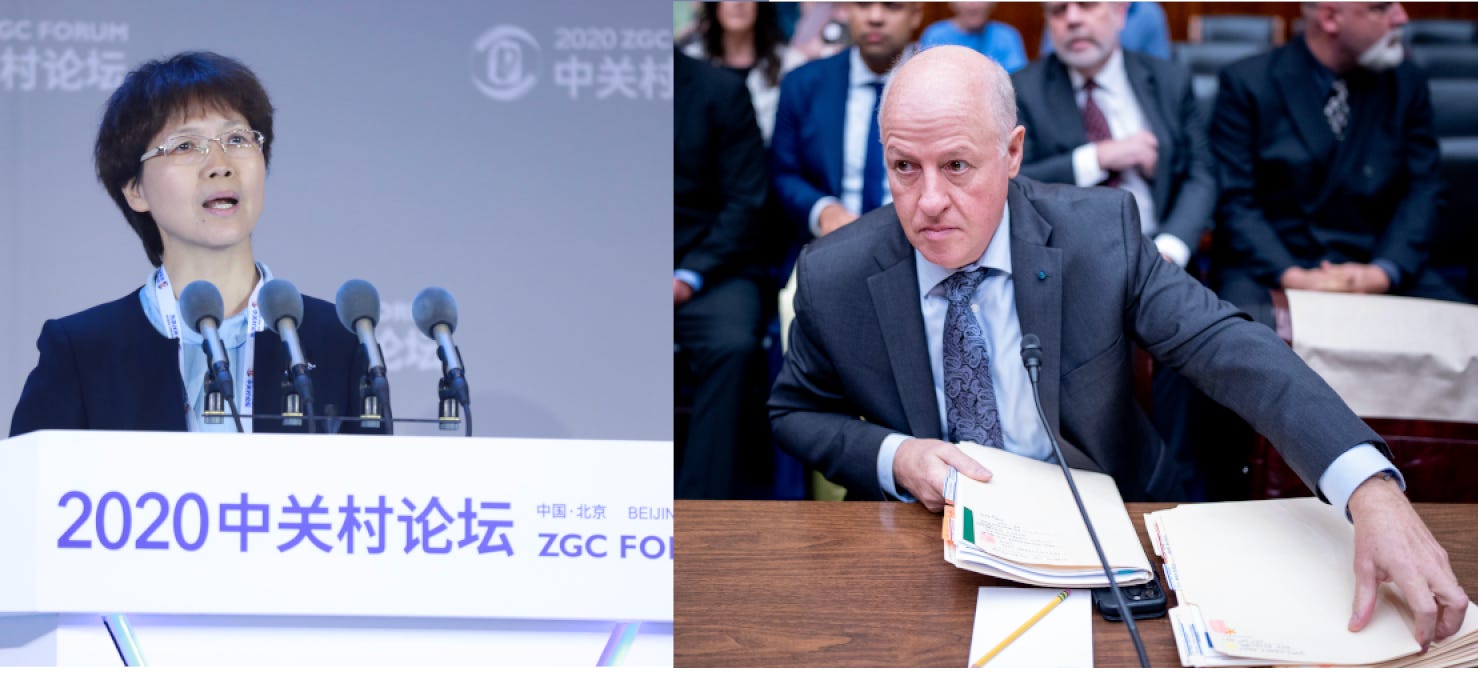
Yesterday, the Senate Homeland Security and Government Affairs Committee voted along party lines to hold Dr. Anthony Fauci in contempt of Congress, after the former NIAID head invoked his Fifth Amendment right against self-incrimination rather than answer questions. Predictably, the press response was to dismiss the vote as a vengeful partisan “stunt” and “ruthless persecution,” with no point other than to “punish” a figure once celebrated for leading America’s Covid-19 response.
The investigation of Fauci is no stunt, though. It’s an effort to use Congressional oversight power to punch through a six-year omerta binding duplicitious health officials, mostly located in the United States and in China. The effort to describe the investigation as partisan persecution is part of the same ongoing Covid coverup. Thousands of pages of Fauci’s diaries and other “investigative documents” released last week make clear that figures like Fauci are still hiding what they know. “The infections spread among people weeks before the Chinese reported that they were dealing with a new infection,” Fauci wrote in a diary entry on January 26th, 2020, adding: “Early on, the Chinese were saying that there is no human to human transmission and all the original 27 cases were from the market. Now we know the market was not the source, it was the amplifier.”
Fauci knew the wet market story was a lie and yet was still promoting the theory months later in story after story after story, while simultaneously denouncing any questions about a possible lab accident as conspiracy theory.
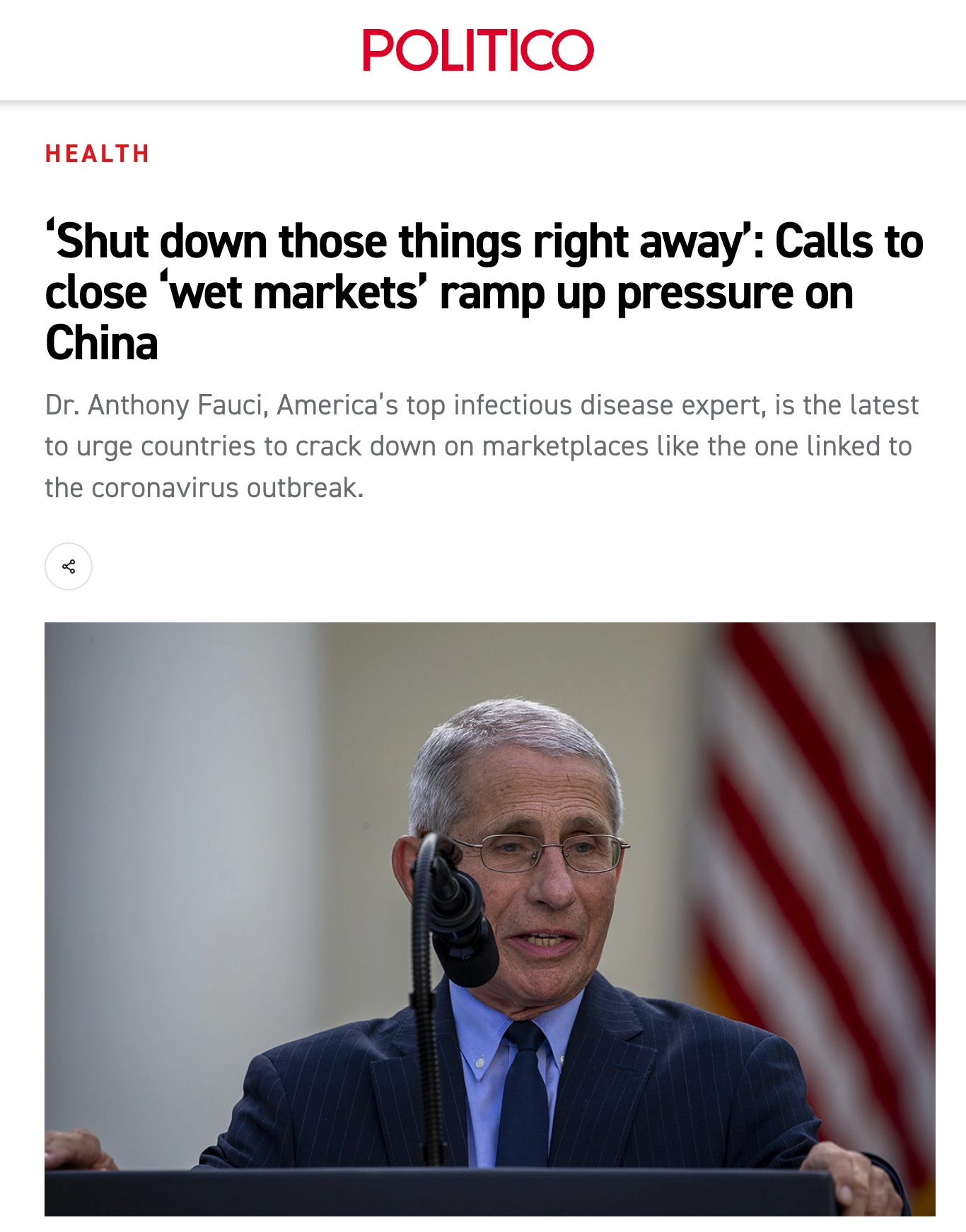
Why do it? The motive almost certainly had to be deflecting attention from the Wuhan Institute for Virology, where multiple branches of the U.S. government and even Fauci’s own NIAID had funded questionable research. If Fauci’s diaries were damning, the emails released last week involving the Wuhan Institute were worse, and spoke much more to possible causes of the pandemic.
On September 9th, 2021, The Intercept published an exposé about a $3.1 million NIH-funded grant from 2014 titled “Understanding the Risk of Bat Coronavirus Emergence,” along with a report on the grant’s progress and other materials. The grant went to the since-debarred EcoHealth alliance and its former president, Peter Daszak, while China’s Wuhan Institute of Virology was a sub-awardee. The relevant documentation, only released after The Intercept sued the NIH, showed that researchers infected genetically engineered mice with chimeric bat viruses, in some cases producing increased pathogenicity in the process — gain of function, seemingly.
Earlier that year, on May 11th, Fauci testified that the NIH “has not ever, and does not now” fund gain of function research at the Wuhan Institute. Senator Rand Paul confronted Fauci about the claim months later, on July 20th, 2021, in an exchange that was derided — even by The Intercept — as a “chilling” “attack,” replete with “false” and “conspiratorial” claims. The documents released by the Intercept appeared to change some minds in the science community. When computational virologist Jesse Bloom of the Fred Hutchinson Cancer Research Center read the text of the 2014 grant, he sent Daszak a letter asking for data about “coronavirus sequences that were collected in China,” to “better understand the evolution of SARS-COV-2.”
Bloom by then already demonstrated a willingness to pose uncomfortable questions about Covid’s origins. In June of that year, he reported uncovering a “set of SARS-COV-2 sequences” from 34 samples that apparently had been deleted from the NIH database. He posted his findings online, saying they suggested “SARSCoV2 was circulating in Wuhan before the December outbreak at the Huanan Seafood Market,” and also wrote a much-discussed paper on the subject.
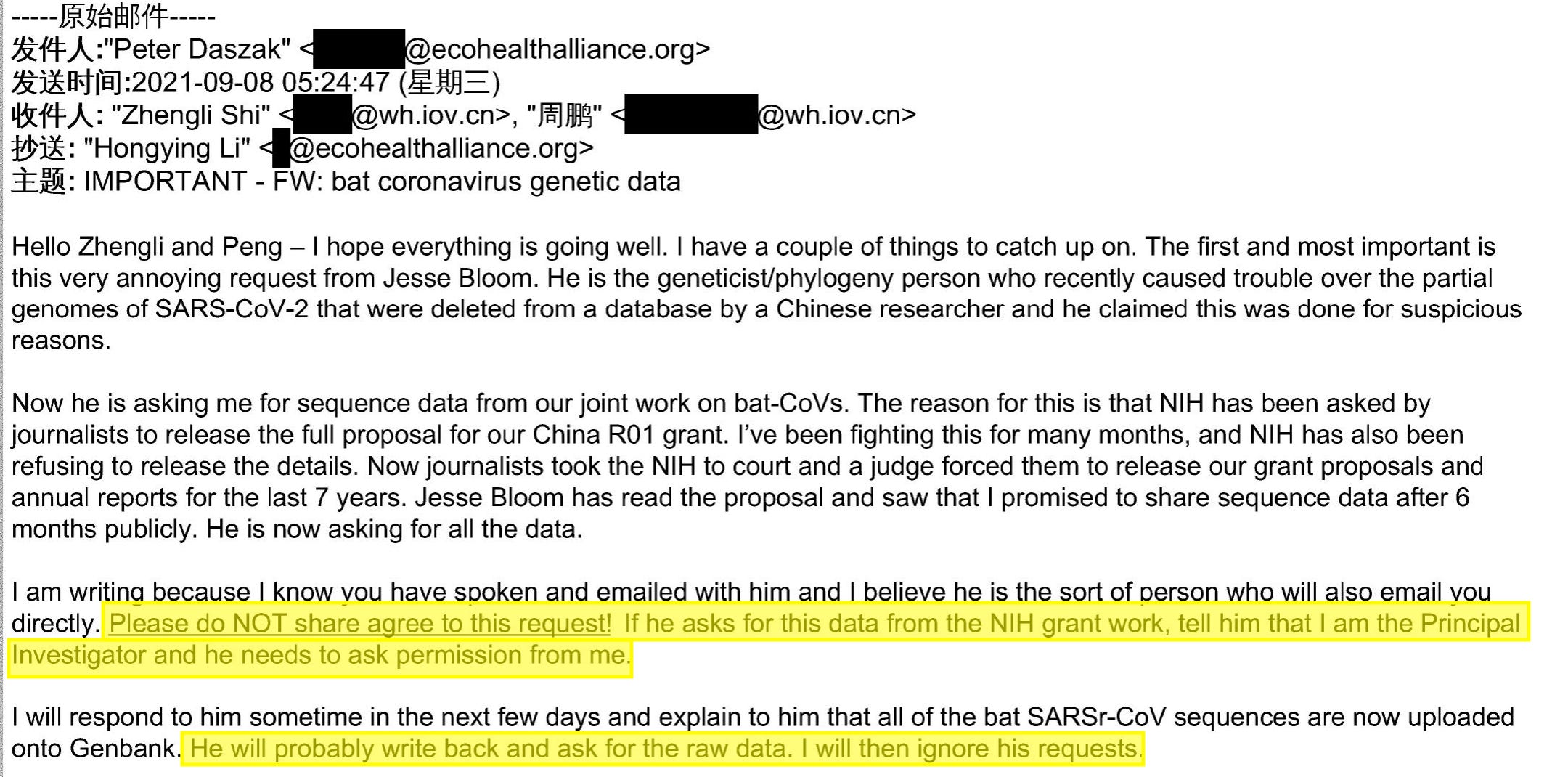
The day after receiving Bloom’s email, on September 8th, Daszak wrote to Wuhan Institute virologist Dr. Shi Zhengli, popularly known as the “Bat Lady,” and complained about an “annoying request from Jesse Bloom,” a “geneticist/phylogeny person” who “recently caused trouble” by highlighting “partial genomes of SARS-CoV-2 that were deleted.” He went on to say that although he’d been “fighting this,” there were journalists who “took the NIH to court and a judge forced them to release our grant proposals.” Bloom was therefore able to read the original proposal and see Daszak had promised to release his data “no later than six months after the receipt of final sequencing data.” Now, he had the temerity to ask for it.
Daszak told Shi he believed Bloom was the “kind of person” who would write to her directly and ask for the data. He then asked Shi to do something extraordinary. “Please do NOT share agree to this request!” Daszak wrote. “If [Bloom] asks for this data from the NIH grant work, tell him that I am the Principal Investigator and he needs to ask permission from me.” He added, incredibly:
I will respond to him sometime in the next few days and explain to him that all of the bat SARSr-CoV sequences are now uploaded onto Genbank. He will probably write back and ask for the raw data. I will then ignore his requests.
“I’ll do what you suggest if I receive the email from Jesse Bloom,” Shi answered. Then, in the middle of an email in which she is planning to be non-transparent with a scientific partner, she wrote that “[Bloom] is obsessive of the conspiracy that China is not transparent regarding the origin of COVID-19. I believe he is a brilliant scientist but don’t understand why he stands with the conspiracy makers”:
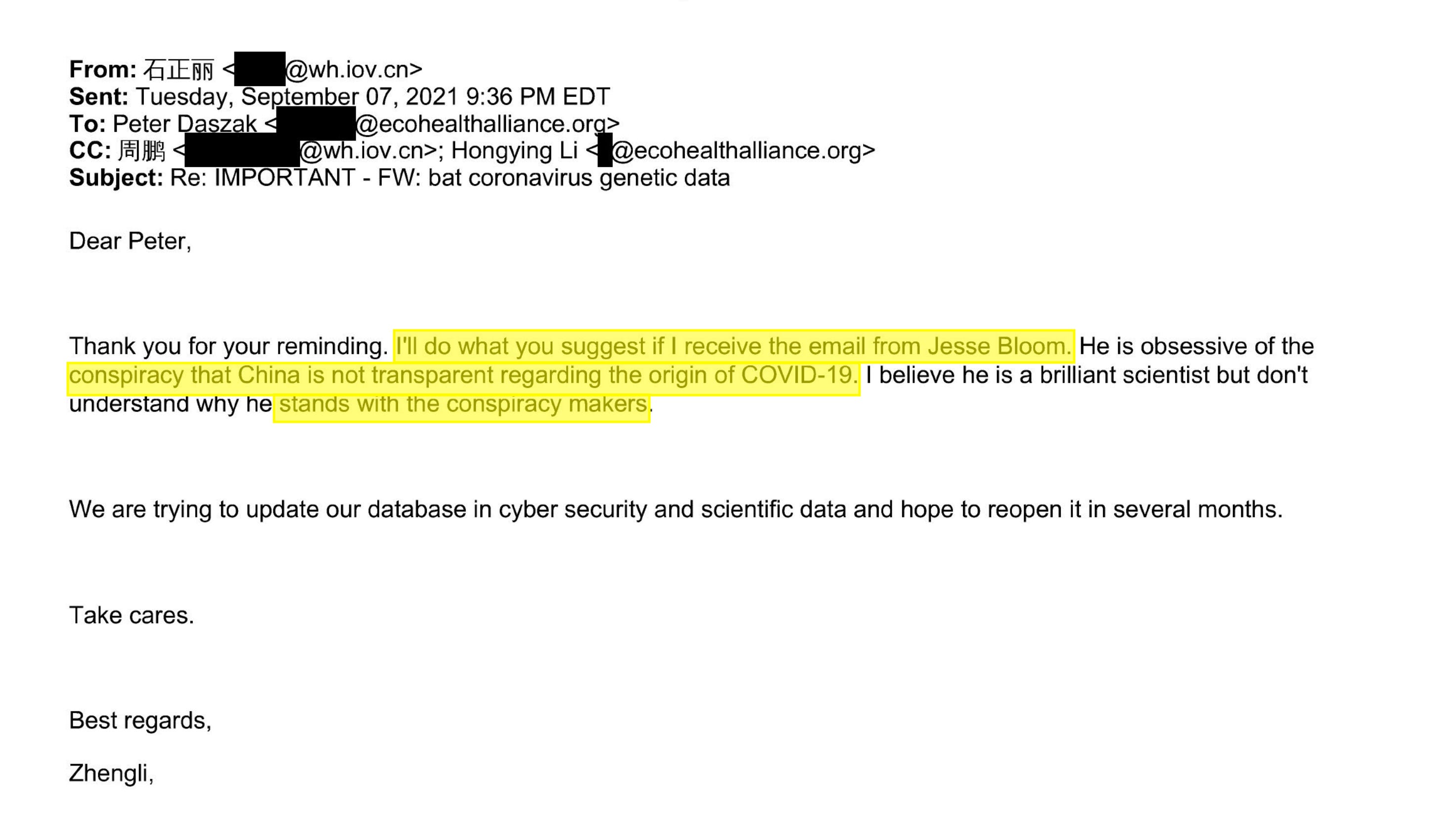
This exchange was highlighted last week by an India-based researcher who goes by the name The Seeker, one of a handful of independent analysts who did a lot of the work journalists like me should have done after the outbreak. He’s known for uncovering key background like a 2013 Chinese medical paper called “The Analysis of 6 Patients with Severe Pneumonia Caused by Unknown Viruses,” which described Chinese patients infected with an unknown disease in a mine in the Mojiang province. Time and again, the Seeker and scattered researchers from a group called DRASTIC uncovered documents, contradictions, and anomalies that forced officials to release data or issue P.R. statements that increased public awareness about the virus and its origins.
“Six years on,” the Seeker said this week, “if you set aside the FOIA and the Senate/Congressional releases, almost every other load-bearing step in this story traces back to DRASTIC and the people working alongside or adjacent to it.” He concedes “we certainly got some things wrong,” but the persistent questioning from people like himself and Viral authors Alina Chan and Matt Ridley kept the doors to inquiry open whenever health officials and their press cheerleaders tried to shut it.
Ridley agrees on this point, noting, “the running was made by citizen-scientists, mostly amateur, mostly self-funded. People like Seeker, Gilles [Demaneuf], Yuri [Deigin], Francisco de Asis, [Charles] Rixey, Billy Bostickson. And the scientists who did contribute were maverick, junior or freelancing mostly: Alina [Chan], Monali Rohalkar, Rossana [Segreto], Dr. Richard Ebright, [Bryce] Nickels.” He added, “Where the fuck were the professional journalists, scientists, spies, politicians? I mean, for an ambitious journalist or scientist this was the chance of the lifetime, surely?”
Apparently not. The pattern last week was typical. While Western media focused on Fauci’s decision to plead the Fifth and covered it as a partisan “witch hunt,” the Seeker and other independents focused on new email exchanges. As he put it, the one above showed “Daszak, on record, coordinating with WIV to block independent scientific review” and “subvert the data-sharing requirements of the grant.” Not one U.S. or European news outlet has covered the exchange.
After six years, there’s now an entire alternative history of Covid to look back on, mostly pointing in one direction. Chinese scientists collected thousands of samples from bats in years prior to 2020 and specifically looked for viruses that bind well to human receptors. As Ridley put it, they also engaged in precisely the right kind of experiment, on precisely the right strain of virus, at precisely the right time, in precisely the right city, and in precisely the wrong biosafety conditions. It’s a damning circumstantial case, but to prove it, someone would have to establish that one of the samples they collected was the progenitor virus to SARS-CoV-2.
Without the data, it will probably never be settled. However, we can certainly answer the question of whether or not the Wuhan Institute and their American partners would cover up important data about viruses. A long list of under-reported incidents already showed they would do it and have done it, while the rest of the documents released last week leave no doubt:
