

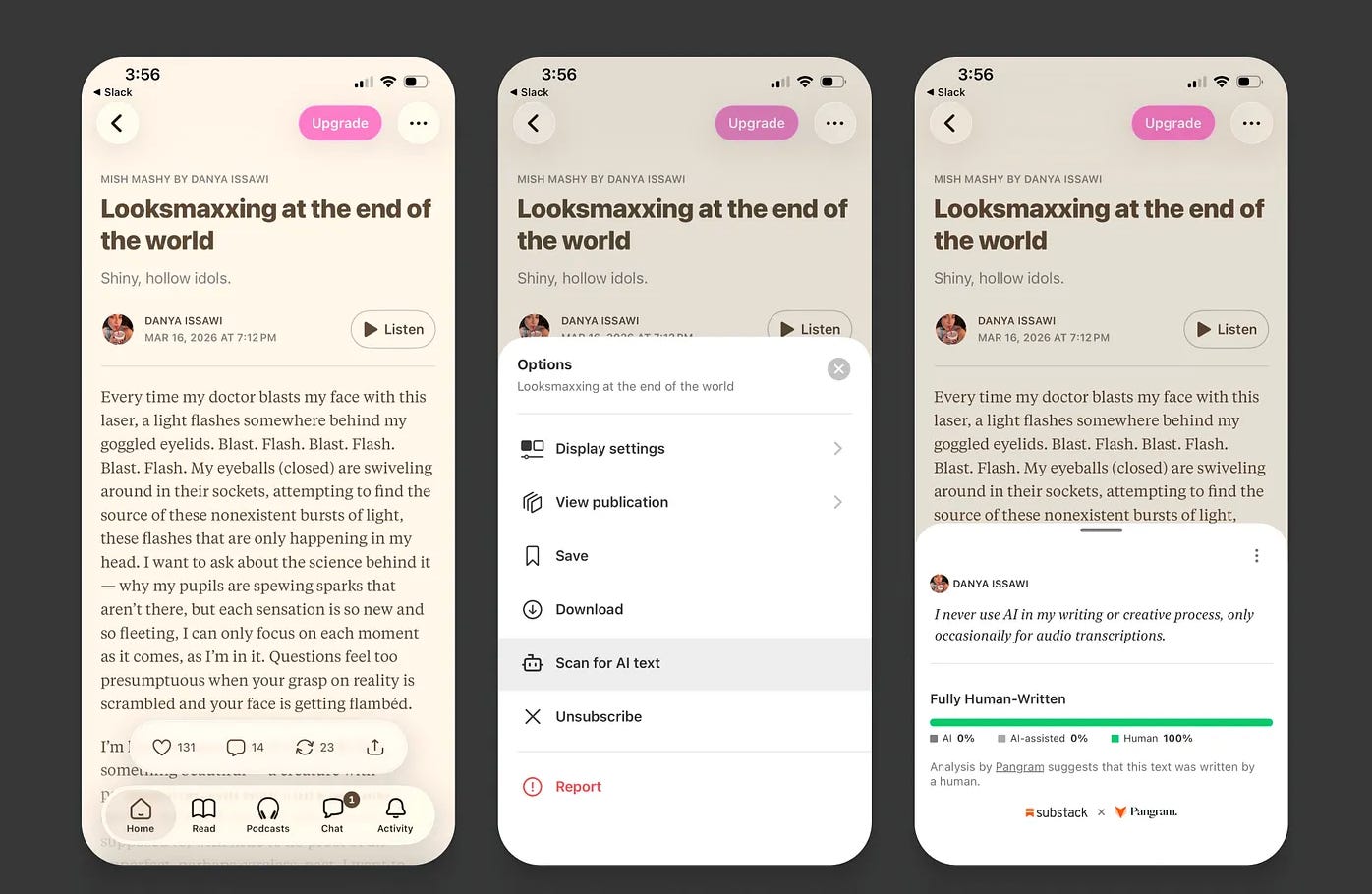
Substack CEO Chris Best published an article yesterday called, “Against Claudefishing,” in which he announced a new site tool to help editors and users spot potential AI-generated text:
We’re partnering with Pangram, the leading AI-detection tool. You’ll be able to scan notes, replies, comments, and posts to see an estimate of how much of the text was written by hand or with AI assistance. This will work on text longer than 100 words, published from today on, and will show an analysis only to those who request it.
He added a screenshot, so users will be able to see how it works:
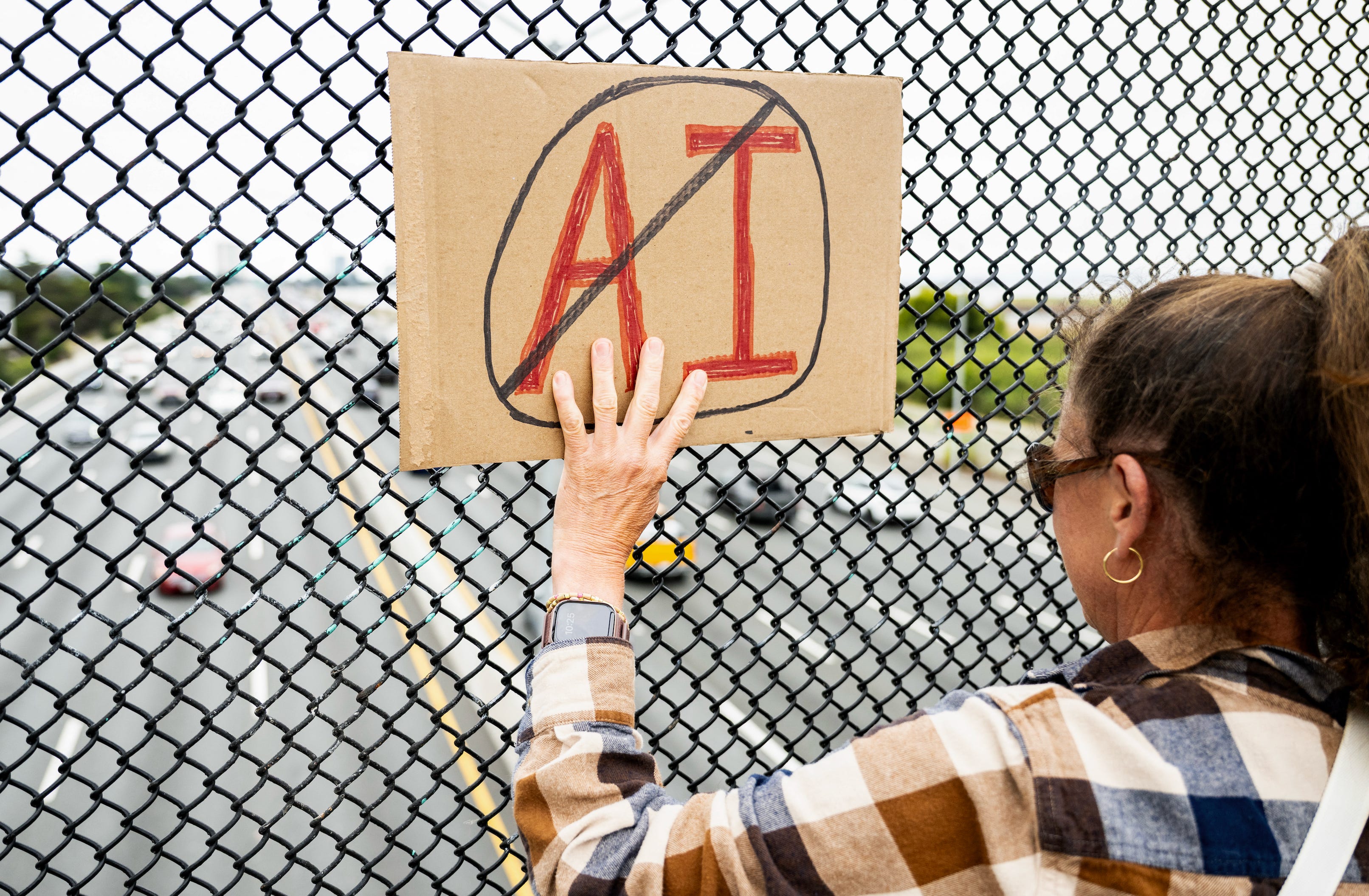
There’s an obvious reason Substack would be the first platform to introduce an option of this type. The company’s business model was always a bet on the appeal of human voice over corporate concoction, which makes the gathering tidal wave of AI-generated content (as Best notes, it constitutes as much as 40% of some platforms already, with roughly one in four social media posts AI-generated) a threat to their bottom line. Substack sites like Racket are “based on trust between people,” but that trust collapses if writers start using machine helpers to feed the content monkey.
I’m going to be on a panel discussion about the issue with other Substack users at 5:00 PM ET tonight. Look at this space, on Notes, or at my Twitter account later for details. A related article is coming out here later.
I’ve had the experience of being accused of pasting AI content even though it was all my own. I am an old-timer who believes in correct spelling, punctuation, and proofreading, as well as some attention to composition and diction.
I'm so sick of reading ai generated articles. Same tone. Same style overall. I can't read more than a couple paragraphs and unsubscribed from more than one content maker who used to be good as a result. I'd rather have fewer authentically written pieces than lots of drivel.