


In oral arguments this week for Trump v. Slaughter, the high-impact Supreme Court case argued over the right of the president to fire the Federal Trade Commissioner, Justice Ketanji Brown Jackson said the quiet part out loud. From an early skirmish with hacksaw-voiced Solicitor General John Sauer:
BROWN JACKSON: You seem to think that that there’s something about the president that requires him to control everything as a matter of democratic accountability, when on the other side we have Congress saying we’d like these particular agencies and officers to be independent of presidential control for the good of the people. We’re exercising our Article one authority to protect the people by creating this independent structure. And I don’t understand why it is that the thought that the president gets to control everything can outweigh Congress’s clear authority and duty to protect the people in this way.
SAUER: Congress has a broad authority in structuring the federal government. What it lacks authority to do is to create these headless agencies, agencies who have no boss and are not answerable to the voters.
BROWN JACKSON: Why? Why does it lack – the Constitution does not say that Congress cannot create an independent agency.
Hoo, boy. There is a view — increasingly popular under Trump — that The People are too dumb to rule and need an educated vanguard class to save them from their racist, nationalist, idiot selves. In the Twitter Files and subsequent public debates about online content, it was frequently said that speech can be free, sure, but only with “guardrails.” Who’d set those “guardrails”? Experts, preferably “independent” ones. Brown Jackson’s voice creaked with impatience this week when she articulated the idea that Smart People must never be subordinate to the Dumb:
Having a president come in and fire all the scientists and the doctors and the economists and the Ph.Ds and replacing them with loyalists and people who don’t know anything is actually not in the best interest of the citizens of the United States… These issues should not be in presidential control.
What may sound like a few offhand remarks in yet another Trump-era battle about the limits of presidential power may be more like the culmination of a long-simmering, monstrously important argument about whether democracy is viable at all in complex modern societies. As Ilya Shapiro of the Manhattan Institute put it, Brown Jackson’s cri de coeur about the “rule of experts” and “independence” harkens to an old idea: “I call that the Wilsonian theory, that there’s a science to administration,” he said. “And democracy would screw that up.”
Trump v. Slaughter concerns more than the fate of the Federal Trade Commission. It’s about competing visions for the future of Western democracy, both implicitly recognizing the same problem: the world, and governments the size of America’s, may have become too technical and complex to be managed in the old way. The Trump Administration's argument, also articulated in this case, calls for enhanced presidential power to take on “headless” bureaucracies, seen as the source of problems. The flip side argued by Brown Jackson (and increasingly by former allies in Europe) calls for more “independent” agencies, who need independence from what they see as the real problem: ignorant voters.
The clash in the Supreme Court this week illustrated the “voters versus experts” divide as clearly as you’ll ever see it. The fuse to this cultural bomb was set almost 150 years ago, and is only now going off:
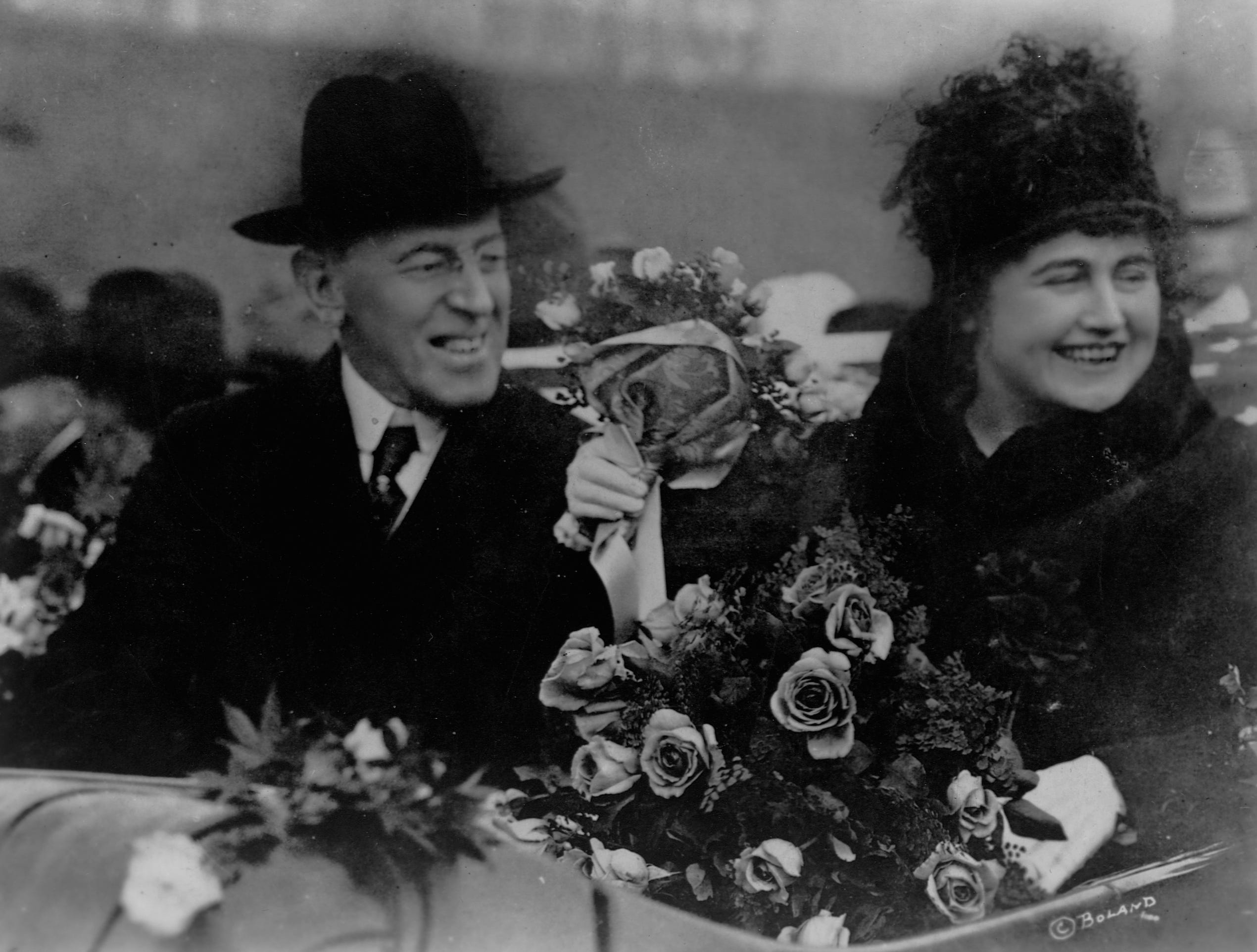
As far back as 1887, future president Woodrow Wilson in a piece called “The Study of Administration, bemoaned the fact that “we have enthroned public opinion,” and warned the United States would fall behind learned counterparts in Europe if it didn’t stop putting in power people who were “at a loss how to use it.” Wilson was more subtle in language, but Brown Jackson’s tirades about “expertise” and “independence” mirrored his suspicion that putting voters in charge of highly technical financial or scientific policy is letting kids with scissors loose in the halls of power.
One former Democratic Congressional staffer who didn’t want to be named, because “I know how this is going to sound,” put it this way: “Look, [Brown Jackson] is right. Trump validates those Wilsonian theories. This is worse than ‘Idiocracy.’”
Some background on this case, triggered by an attempt by Trump to do the thing that made him famous, namely fire someone.
The Supreme Court in May signaled in a case called Trump v. Wilcox that it was ready to take an axe to an important (if little known) 90-year old precedent known as Humphrey’s Executor v. United States that limited the power of presidents to remove government officers. The case grew out of a time in the mid-1930s that was nearly as chaotic as ours, when another very controversial “populist” president in Franklin Delano Roosevelt tried to fire his Federal Trade Commissioner, William Humphrey, for being insufficiently supportive of the New Deal. “I do not feel that your mind and my mind go along together,” is the Mr. Spockian language F.D.R. used in an unsuccessful letter asking for Humphrey’s resignation.
Humphrey refused to resign and soon after died of a stroke, though his protest of his firing lived on in the courts. On behalf of the deceased plaintiff Humphrey’s estate — hence “Humphrey’s Executor” the Supreme Court in 1935 ruled 9-0 that Commissioners could only be fired for “inefficiency, neglect of duty, or malfeasance,” serving as they do in an “independent, nonpartisan body of experts, charged with duties neither political nor executive, but predominantly quasi-judicial and quasi-legislative.”
There are no quasi-anythings in the Constitution, whose “Newtonian” (as one attorney reached this week put it) design depends upon constant kinetic struggles between clearly defined branches of government, all checking one another. “There’s no concept of a fourth independent branch,” is how Margot Cleveland of the New Civil Liberties Alliance put it.
The Humphrey’s Executor decision however was handed down at a time when there was widespread panic about an inexpert socialist autocrat in F.D.R. transforming American government from something simple into “a highly complex, bungling agency for throttling business and bedeviling the private lives of free people,” as author Howard Kershner wrote at the time.
The idea of neither-fish-nor-flesh “quasi”-agencies living in gray areas, safe from presidential meddling, was appealing enough to some under F.D.R. In the age of Trump, Humphrey’s Executor practically became holy writ, especially to the growing contingent of Washington lawyers who believe they’re living through the Apocalypse (“Check out the video of [Justice Sonia] Sotomayor talking about crying after work on some days if you want to see where the frustration about this one comes from,” the former Democratic staffer advised).
When the Supreme Court in the May Wilcox case upheld Trump’s right to fire a member of the National Labor Relations Board, Justice Elena Kagan wrote a seething dissent. Humphrey’s Executor, she said, was “not just any precedent,” but one that “undergirds a significant feature of American governance,” namely “administrative bodies carrying out expertise-based functions with a measure of independence from presidential control.”
Nonetheless, the current Supreme Court with its conservative majority ruled in May that the president may “remove without cause executive officers who exercise that power on his behalf.” For the Justices in the majority, Wilcox was basically a geographical dispute. If the FTC is in the Executive Branch, the chief executive gets to do the firing. Plaintiff Gwynne Wilcox and her lawyers tried to lash themselves to the hull of the Federal Reserve Bank, arguing that if the court gave Trump power to fire NLRB members he could exercise similar despotic control over the Fed. Justices called the bluff by offering a carve-out, saying the Fed is a “uniquely structured, quasi-private entity” that wouldn’t come into play, notwithstanding Brown Jackson’s warnings about possible Fed takeover.
“The court telegraphed what it’s going to do in Wilcox,” Shapiro said. “It wrote two paragraphs casting doubt on the continuing validity of Humphrey’s Executor, while carving out the Fed.
Coverage of both the Wilcox and Slaughter cases has been extraordinary, with headlines not wanting to break the bad news to audiences (“Supreme Court allows Trump to fire members of independent agency boards — for now” was a common reaction to the Wilcox ruling). It’s frequently suggested that even if the Court rules to do away with Humphrey’s Executor “for now,” it will be wrong. The obvious big picture question, about whether or not an “independent” body or bodies should be empowered to act as permanent bulwarks against voter passions, is never addressed.
Justice Sotomayor, who of late has made a number of comments suggesting change is bad mmkay, tried to get Solicitor General Sauer (who argued on the free speech side in the Murthy v. Missouri case) to concede that overturning really old law is rare and bad. “What other cases have we overturned that have had a pedigree of a hundred years?” she asked. Sauer instantly rattled off the personal jurisdiction case Pennoyer v. Neff, to which Sotomayor answered, “That was an economic case.” He rattled off another. “But which other case has fundamentally altered the structure of government?” she finally argued in frustration.
The irony is that Sotomayor herself wrote the opinion for such a case, Hererra v. Wyoming, in 2019. If “when was the last time we overturned an old law?” doesn’t sound like a legal argument, neither really is Brown Jackson’s notion that scientists and PhDs shouldn’t be fired by “people who don’t know anything.” If not the president, then who has the authority to remove Commissioners? “Independent” can’t mean answerable to no one, can it?
At one point former Commissioner Slaughter’s lawyer Agit Agrawal seemed to suggest a formalization of the “quasi-agency,” saying Congress in creating bodies like the FTC wanted “an expert agency that could take on that task and that would be insulated from political pressure not just emanating from the president but emanating from Congress too.”
A thrilled Brown Jackson rushed to co-sign this concept. “Your point is that they were doing something important for the interest of the American people,” she said, not to strip the president of power, “but to fulfill its own Article One obligations to legislate in the best interest of the American people.”
At another point, a seemingly flabbergasted Chief Justice John Roberts asked Agrawal if he was saying Congress could just take over the job of running executive branch departments. “I’m sorry, I just want to make sure I understand because it’s fairly basic. I mean, there are there some cabinet departments that you say Congress could just take over,” Roberts said. “Department of Veterans Affairs, Department of Education, they think, well, experts can do a better job of it?”
“Yes, I think that it is probably within the realm of possibility for agencies. Yes, Justice Chief Justice Roberts,” Agrawal said.
Again, the problem here is that the jobs of the various branches are clearly described in the Constitution. Congress makes laws, the Executive Branch carries them out, and the Supreme Court makes sure they’re legal. There’s no provision for growing a little executive branch on the ear of Congress.
“Congress can’t create an agency that takes power away from the president. If Congress wants to create an agency that’s doing Congress’s job, that’s also a problem,” says Cleveland. Congress can create Commissions, sure, but unless they’re purely advisory, they necessarily fall under control of the executive branch.
The natural question that arises in all this, however, is why these questions never came up before. Seemingly every president would want power to fire Commissioners, why didn’t they sue before? “I think they just accepted the statutory structure,” is Shapiro’s explanation, adding however that it was “was predictable that there would be a case, but Trump’s been the only one who’s decided to go for it.”
Sauer addressed the question in an exchange with Justice Brett Kavanaugh, who asked why the law wasn’t “challenged” for 90 years. “The president,” Sauer answered, “sometimes may have a political incentive to allow tough decisions to be outsourced so to speak to agencies that he doesn’t have direct control over.” Translation: presidents like the freedom to hide behind “independent” agencies and let them take the political hit for unpopular decisions. This goes against the “Buck Stops Here” legend of the chief executive, when presidents like Harry Truman were unafraid to tell voters whom to blame when things go wrong.
The Court has already signaled how it’s going to rule on this issue, which raises a disturbing question for Sotomayor, Kagan, Brown Jackson, and others who aren’t fans of Trump: what then? Okay, said Kagan to Sauer, say you get to fire Commissioners. “How about inferior officers?”
Legally, Sauer was on solid ground saying we’ll cross that bridge if we come to it. “We haven’t challenged any restrictions on inferior officers,” he said.
Politically, however, the liberal justices wanted to know. “Why wouldn’t that also have to go?” she asked. Later: “How about employees?” The implication was clear: ruling in favor of the president on this issue is a slippery slope to giving presidents power to remove all executive branch employees. This only sounds strange because we’ve been living for ninety years in a world in which “Quasi” agencies have grown exponentially, issuing rules, making regulatory decisions, and growing substantially in authority, without much oversight or accountability to voters. Were we ever meant to live in a world like that? Will giving (or returning, depending on your point of view) power to the executive to do the thing that made Donald Trump famous — fire people — make government more or less responsive?
“I think it’s going to start kind of a new trend to get back to what our government’s supposed to look like, which it hasn’t for some time,” says Cleveland.
“I think the worst-kept secret in Washington is that everyone knows voters don’t know enough to govern,” says the former Democratic aide. “They can’t be allowed to put people like RFK in charge of science.”
Again, this issue extends far beyond the fate of the Federal Trade Commission and extends back to the early part of the twentieth century, when as Shapiro notes Woodrow Wilson sold “administrative science” as a new form of progressivism that would allow government to be “administered with enlightenment, with equity, with speed, and without friction.” Wilson understood the models he admired in Europe were more centralized and authoritarian, and believed that if “the science of administration” was adopted in the U.S., “we must Americanize it, and that not formally, in language merely, but radically, in thought, principle, and aim as well.” Wilson believed that to avoid creating an “offensive official class” with “hearts narrowed to the meanness of a bigoted officialism,” the new hyper-empowered experts “must be at all points sensitive to public opinion.”
That clearly hasn’t happened, or at least, the “bigoted officialism” didn’t become visible enough to put someone like Trump into office until recently. As a result we now have two models of government that believe the status quo needs a radical makeover. On the right we have officials like Education Secretary Linda McMahon arguing her own Department “does not educate one child. It does not establish any curriculum in any states. It doesn’t hire teachers. It doesn’t establish programs.”
In the MAGA/DOGE vision, unaccountable bureaucracies inside the state and outside of it (universities, for instance) are the bugbears stifling American creativity and efficiency. Meanwhile, as the comment by John Kerry that the First Amendment is a “major block” to the hammering out of disinformation got most of the headlines, the more important line the former Secretary of State delivered to the World Economic Forum was about “our problem, particularly in democracies.” Kerry said the cacophony of digital voices in free societies made it “really hard to build consensus” and therefore “really hard to govern.” Check out Kerry’s Lebowskian Not on the rug, man frustration with the Bill of Rights here:
A clearer translation of Kerry might have been that social media crippled effective propaganda. This is a version of the same sentment Brown Jackson echoed in the Murthy case, in which she complained about the First Amendment “hamstringing” the government, and Brown Jackson’s constant invocation of the need for “independent” structures to “protect” the people isn’t far thematically from former EU official Thierry Breton’s angry insistence that the Union would do whatever it took, including cancel elections, to “protect our democracies.”
Trump is going to win this skirmish, but the larger war between “expert” administration and democracy awaits, with high potential to fracture the post-WWII order. These two ideas have lived in tension for a long time, and appear no longer to coexist peacefully. To be continued.
Not sure how but the last paragraph got chopped off in the email version of this document. My apologies. It reads:
"Trump is going to win this skirmish, but the larger war between “expert” administration and democracy awaits, with high potential to fracture the post-WWII order. These two ideas have lived in tension for a long time, and appear no longer to coexist peacefully. To be continued."
KBJ is a DEI hire by President Autopen. She was selected for her race and gender, but she can't define what a woman is because she is not a biologist. "Trust the experts" and "follow the science" is permanently discredited after all the lies about the COVID jabs, Biden's senility, and the climate cult.