

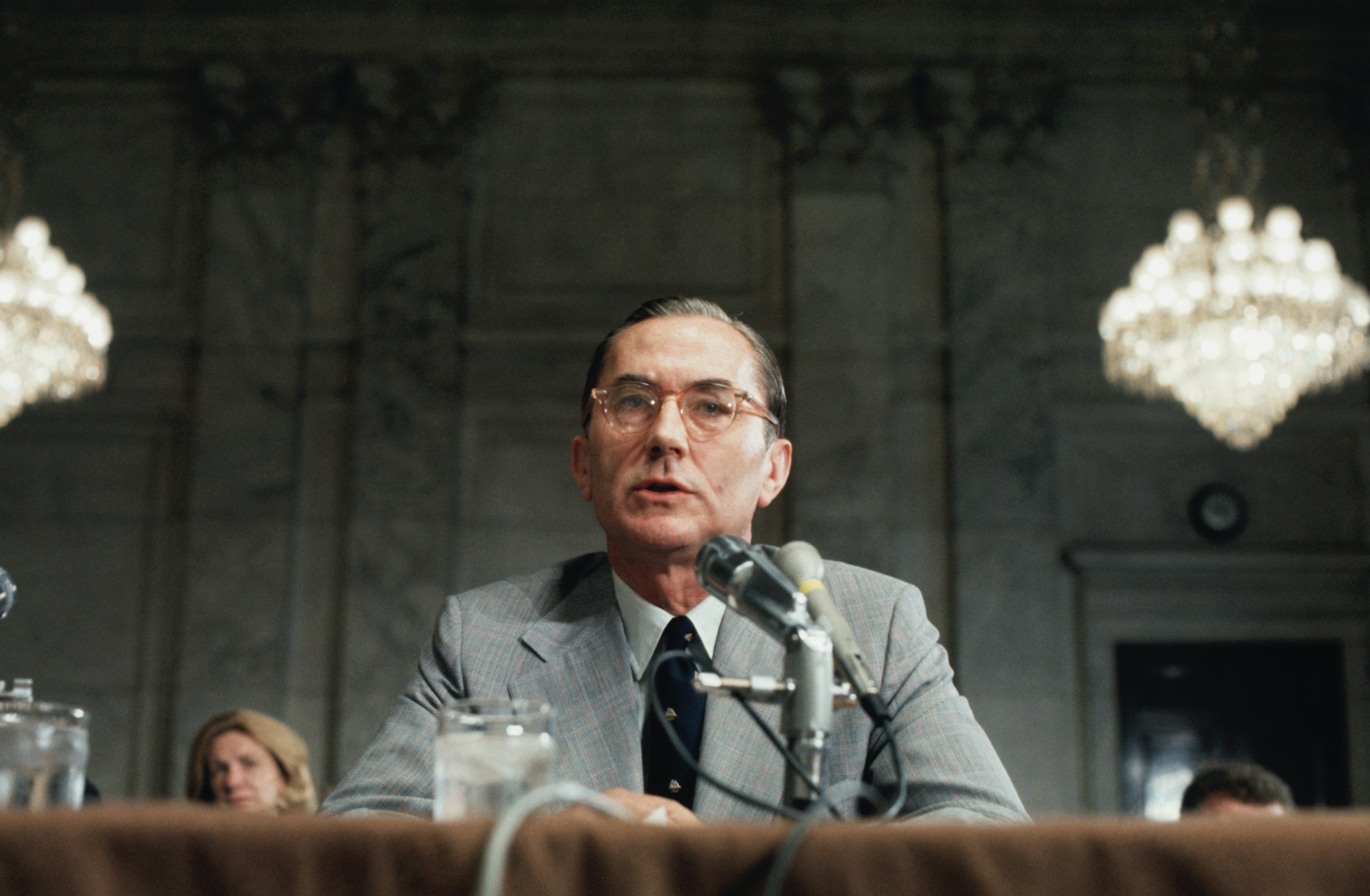
The Middle East is on fire, the planet on the verge of world war, the Homeland Security director just ousted. It’d hard to pay attention to anything else. Still, if you want to know why news that the FBI has begun to turn over long-concealed “prohibited access” files to Congress might matter, just ask Seymour Hersh.
Fifty-two years ago, on December 21, 1974, the famed muckraker printed “Huge C.I.A. Operation Reported in U.S. Against Antiwar Forces, Other Dissidents In Nixon Years” in the New York Times. Hersh disclosed that “intelligence files on at least 10,000 American citizens were maintained by a special unit of the C.I.A.,” and spoke of “evidence of dozens of other illegal activities.” These misdeeds were part of a trove of dirty secrets in the CIA’s past that came to be known as the agency’s “Family Jewels.” Some sources Racket spoke with this week recalled the case in conjunction with news about the discovery of a cache of secret files at the FBI.
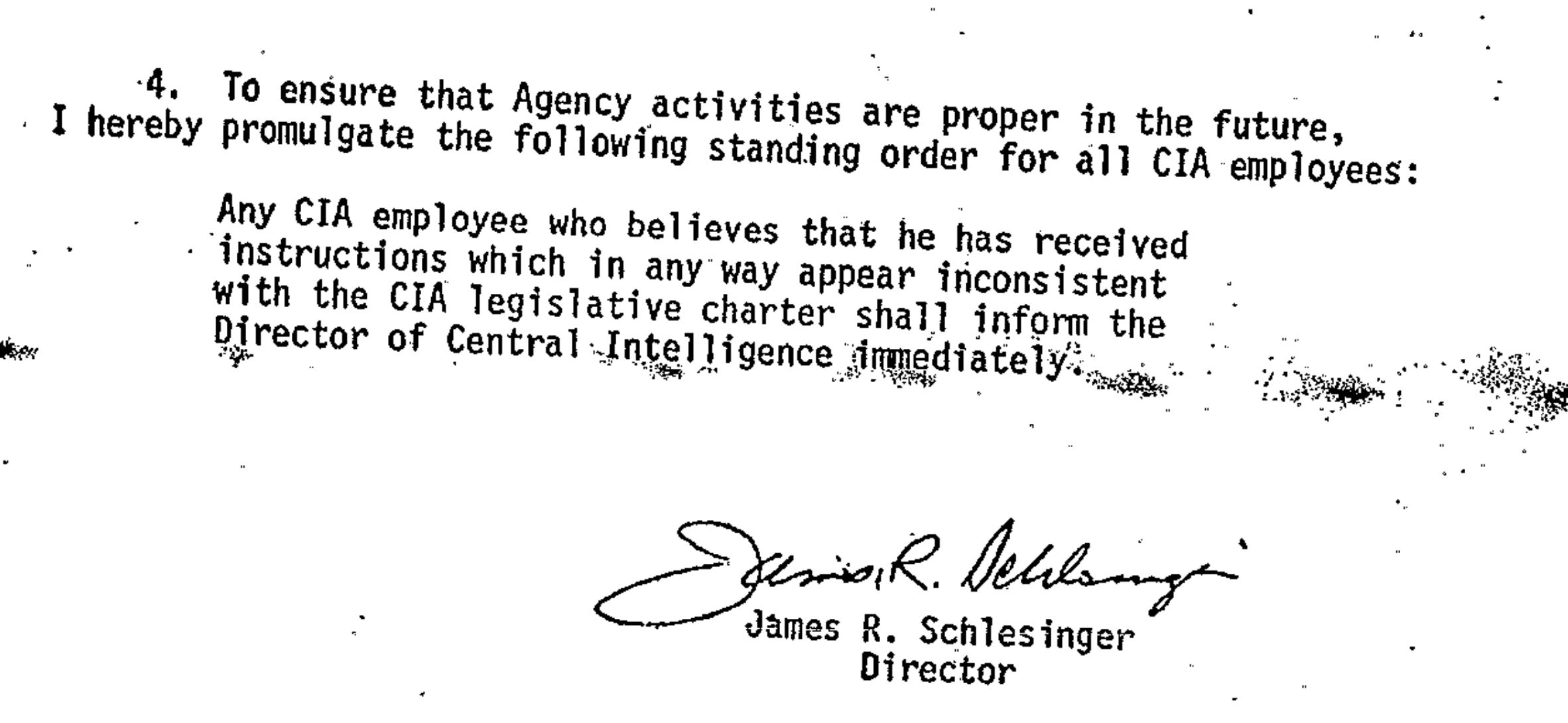
The “Family Jewels” story came to the surface after press reports of potential CIA involvement in the Watergate scandal. The news led then-director James Schlesinger to sign a May 1973 directive mandating that subordinates compile files on all material that “might be construed to be against the legislative charter of the agency.”
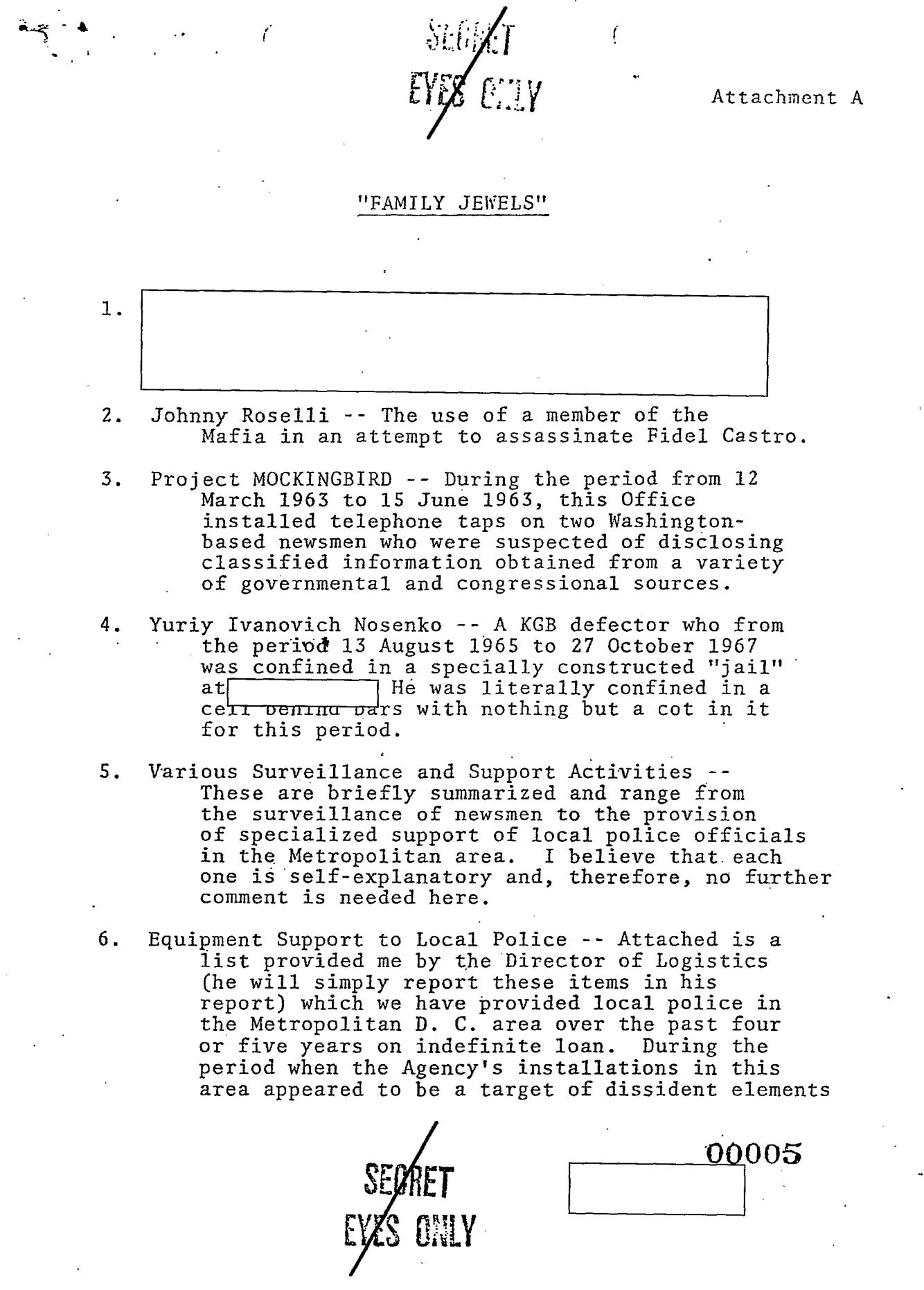
The subsequent 702-page report included jaw-dropping details of assassination plots, infiltration of dissident groups, human experimentation, surveillance of reporters, a vast mail-opening program, and instructions to foreign police on bomb-making, sabotage, and other dubious activities written by the infamous counterintelligence official James Jesus Angleton. None of it was meant to be publicized, and some remains secret to this day.
“You have to understand, I didn’t get all the Family Jewels,” said Hersh, when reached this week. “We got a chunk. They censored maybe 40, 45 percent of the material. The first stuff I saw, it had a lot of deletions in it. It was just that’s the way they did it internally.” The significance was clear. “There were obviously things they didn’t want to put down in writing. But even in writing, they had an awful lot of bad stuff.”
The “Family Jewels” story rocked the intelligence world and ended up providing significant fodder for Senate hearings to investigate intelligence activities. Led by Idaho Senator Frank Church in 1975, the hearings led to some reforms, but it was never clear that the CIA or any other part of the intelligence community ever stopped engaging in off-books activities.
Hersh never believed the government fully disclosed such programs. He described hearing about things the CIA had been involved with, like foreign assassinations in the 1950s, that weren’t in the files.
“That’s the kind of stuff I know should have been in the Family Jewels,” he said. “There were certain things left out. I know there are things missing.”
While reporting this week on the FBI’s prohibited access materials, which are digital case files designed to be hidden in the FBI’s SENTINEL filing system that turn up false negatives when searched for by anyone but a small club of names around the bureau’s director, both current and former officials brought up the CIA’s “Family Jewels” as an analog.
“It’s James Jesus Angleton all over again,” sighed one.
The stories do have things in in common. Like the prohibited access documents, the “Family Jewels” programs emerged just a few years after congressional investigators got wind of their existence via investigations of high profile domestic surveillance scandals.
Americans right now are so hyper-focused on partisan politics and the cui bono aspects of news that they’re likely to miss the significance of this week’s revelations. When Iowa Senator Chuck Grassley confirmed last night that Attorney General Pam Bondi and FBI Director Kash Patel had begun to turn over the long sought prohibited access material, which is believed to contain at least 25 years of off-books activities, it at least opened the door to the possibility that voters will get a peek at how the government’s domestic spy agency — for that’s what the FBI became this century — really operates.
Such transparency was a central promise of the Trump campaign, but the Jeffrey Epstein files fiasco collapsed expectations. Patel obviously never had the confidence of Democrats and lost a good deal of confidence with onetime supporters on the right in the last year, many of whom still doubt he has the chops to push this system all the way out into the open, with one former agent saying it would take an “inspirational leader” to pull off something on this scale, only “he’s not that guy.”
That makes this a crucial moment for Patel. In these files there’s an opportunity for him to expose the original sin of 21st-century America, its overcommitment to secrecy and espionage.
The post-9/11 America built by former Vice President Dick Cheney was premised on a super-empowered intelligence state with sweeping authorities, where old notions about judicial review went out the window.
“It was, ‘How are you going to know what we do?’ and ‘What do you mean, warrants?’” said Hersh.
The new state built in the wake of 9/11 was about impunity, and impunity required both enhanced secrecy and new ways to hide from oversight and review.
Enter prohibited access. Trump voters and partisans will be particularly interested in any secreted files involving potential overreach in cases like Jack Smith’s “Arctic Frost” investigation or the “Crossfire Hurricane” case that morphed into Robert Mueller’s Trump-Russia probe, but what’s in the files is less important than the existence of the system itself. The history of the FBI, in particular since 2001, has been marked by a long transformation away from a primary mission centered on policing and enforcement to one involving political spying and intelligence-gathering.
If you listen to the accounts of FBI whistleblowers going back to 9/11, a group most recently headed by George Hill, Garrett O’Boyle, Steve Friend, and Kyle Seraphin and previously led by Mike German and Colleen Rowley, there’s significant overlap in the complaints. Repeatedly, agents describe being pulled off good leads or real enforcement work and reassigned to useless, constitutionally questionable spying practices. German in his book Disrupt, Discredit, and Divide, wrote about how by 2008, the FBI committed to a program of “racial and ethnic mapping,” committing resources to tracking “ethnic businesses.” That same year, the FBI instituted a new “baseline collection plan” that not only empowered agents to collect information for its own sake, but essentially required that they make information gathering for purposes other than making cases a priority.
In the years since, ex-FBI agents increasingly tell stories of being assigned to cases where enormous quantities of resources are allocated to investigating low-level government employees or individuals, with no crime even alleged. Or, they talk about being given casual access to awesomely intrusive surveillance tools with almost no oversight, spending years sitting on houses of non-suspects, going through their garbage, and following their every digital move through shouldn’t-be-legal office capabilities. The FBI, along with other agencies in America’s ballooning network of intelligence or enforcement bureaucracies (down to the TSA), went from catching bad guys to being an early warning system and blackmail vault for political insiders, a giant-sized version of the cabinet containing J. Edgar Hoover’s infamous “official and confidential” files.
Much as Hersh knew enough to know that there were still things missing from the final “Family Jewels” productions, whistleblowers have told enough recent stories of corruption that we’ll know if the results of prohibited access investigations are wanting. The public almost never wins in these situations, or if they do it’s decades in the future, but every now and then there are little victories, and this story could be one of them. But, the pressure has to stay on.
“The public almost never wins in these situations…”
Wow! you said a mouthful right there. Thank you once again, Matt, for your (often thankless) work.
Inspirational leader? Yeah Patel aint the guy. But that's not what you need You need an Army of dedicated auditors. Kinda like the Twitter files. There's an idea!!!